

Hey there! As a rubber stopper supplier, I often get asked about various technical aspects of our products. One question that pops up quite a bit is, "What is the elongation at break of rubber stoppers?" Well, let's dive right into it.
First off, let's understand what elongation at break means. In simple terms, it's the maximum amount a rubber stopper can stretch before it breaks. You can think of it like pulling a piece of chewing gum. If you pull it gently, it stretches, but if you pull too hard, it snaps. That's basically what we're talking about here, but with rubber stoppers.
Now, why is this important? Well, when you're using rubber stoppers in different applications, you need to know how much they can stretch without failing. For example, in the pharmaceutical industry, rubber stoppers are used to seal vials containing medicines. If the stopper doesn't have enough elongation at break, it might crack or break when it's being inserted into the vial or during storage and transportation. This could lead to contamination of the medicine, which is a big no - no.
In the lab setting, rubber stoppers are used to seal test tubes and flasks. If they can't stretch enough to fit properly, they won't create a good seal, and you might end up with leaks or evaporation of your samples. So, as you can see, elongation at break is a crucial property for rubber stoppers.
The elongation at break of rubber stoppers can vary depending on a few factors. One of the main factors is the type of rubber used. There are different types of rubber, such as natural rubber, synthetic rubber like butyl rubber, and silicone rubber. Each type has its own unique properties, including elongation at break.
Natural rubber is known for its high elasticity and relatively high elongation at break. It can stretch a lot before breaking, which makes it suitable for applications where a high degree of flexibility is required. However, natural rubber also has some drawbacks. It's more prone to aging and degradation, especially when exposed to heat, oxygen, and certain chemicals.
On the other hand, butyl rubber is a popular choice for pharmaceutical and medical applications. It has good chemical resistance and a relatively high elongation at break. Butyl rubber stoppers can withstand a fair amount of stretching without breaking, which is important for ensuring a tight seal in vials. You can check out our Injection Rubber Stopper and Rubber Stopper for Injection options, which are often made from high - quality butyl rubber.
Silicone rubber is another option. It has excellent heat resistance and chemical stability. While its elongation at break might not be as high as natural rubber in some cases, it still offers good flexibility and can be used in a wide range of applications. Silicone rubber stoppers are often used in high - temperature environments or where chemical compatibility is a concern.
Another factor that affects the elongation at break is the manufacturing process. How the rubber is mixed, molded, and cured can have a significant impact on its mechanical properties, including elongation at break. For example, if the rubber is not cured properly, it might not have the optimal strength and flexibility, which could result in a lower elongation at break.
At our company, we take great care in the manufacturing process to ensure that our rubber stoppers have the right elongation at break for different applications. We use high - quality raw materials and follow strict quality control measures to make sure that each stopper meets the required standards.
Let's talk about how we measure the elongation at break of rubber stoppers. There are standard test methods for this. One common method is the tensile test. In a tensile test, a sample of the rubber stopper is clamped at both ends and then pulled at a constant rate until it breaks. The machine measures the force applied and the amount of stretch. From this data, we can calculate the elongation at break as a percentage.
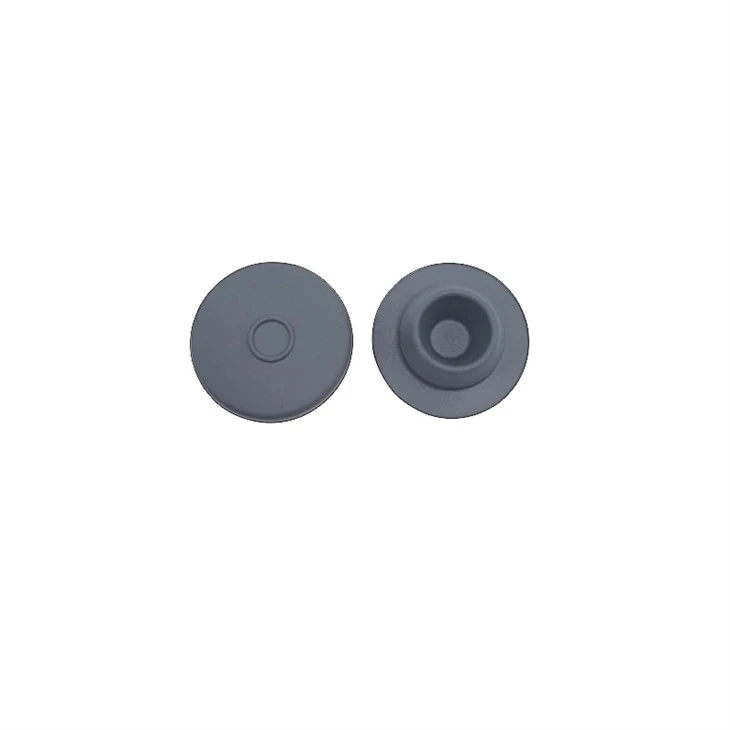
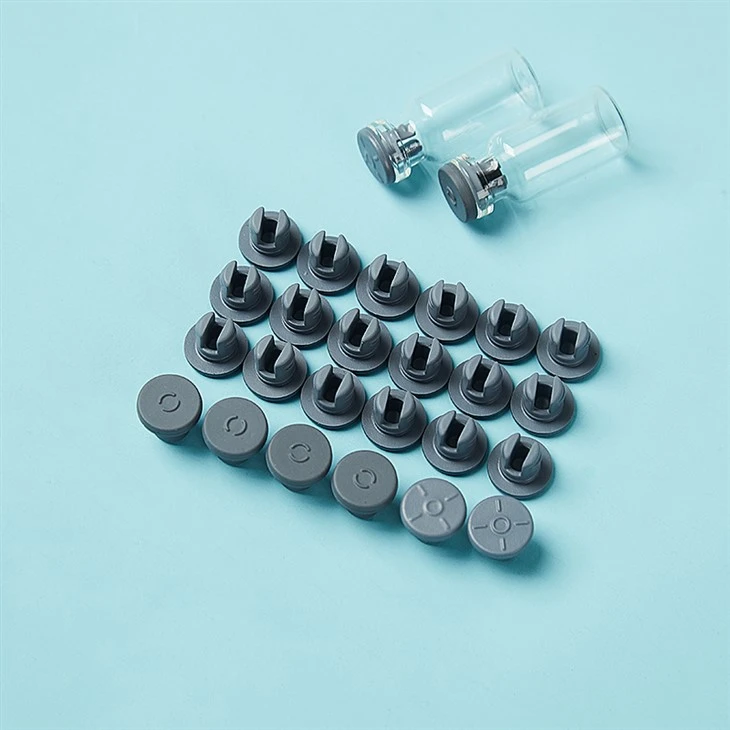
For example, if a rubber stopper sample has an original length of 100 mm and it stretches to 300 mm before breaking, the elongation at break is (300 - 100)/100 * 100% = 200%. Different industries and applications have different requirements for the elongation at break. In the pharmaceutical industry, for instance, the elongation at break of rubber stoppers used for injectable products is usually required to be within a certain range to ensure proper sealing and safety.
If you're in the market for rubber stoppers, it's important to consider the elongation at break based on your specific needs. If you need a stopper that can fit tightly into a container with a bit of force, you'll want one with a higher elongation at break. If you're dealing with a more static application where there's not much stretching involved, a lower elongation at break might be acceptable.
We offer a wide range of rubber stoppers, including the Rubber Stopper 32mm, in different sizes and materials to meet various requirements. Whether you're in the pharmaceutical, laboratory, or other industries, we can provide you with the right rubber stoppers.
So, if you're looking for high - quality rubber stoppers with the right elongation at break for your application, don't hesitate to get in touch with us. We're here to help you find the perfect solution for your needs. Contact us to start a procurement discussion and see how we can meet your rubber stopper requirements.
References:
- ASTM D412 - Standard Test Methods for Vulcanized Rubber and Thermoplastic Elastomers - Tension
- ISO 37 - Rubber, vulcanized or thermoplastic - Determination of tensile stress - strain properties