

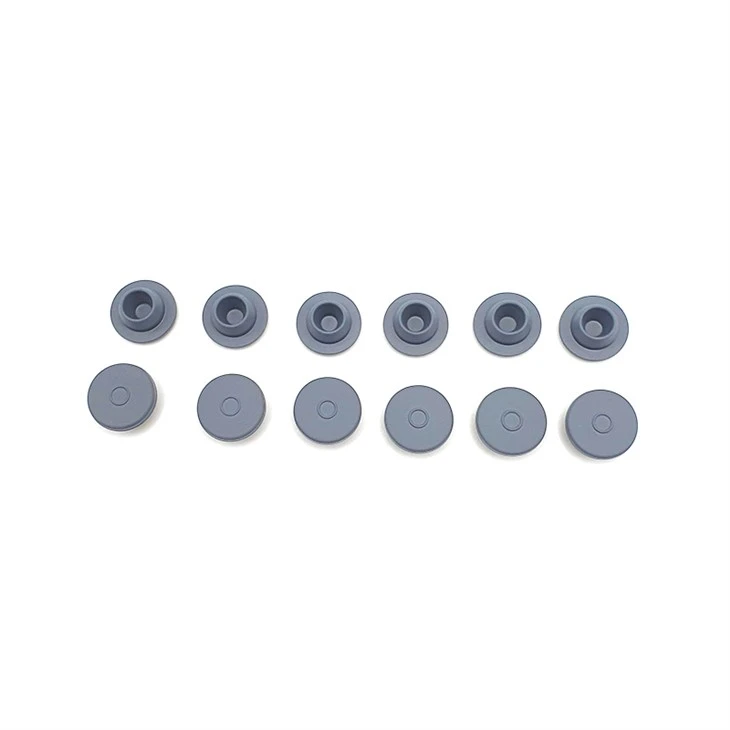
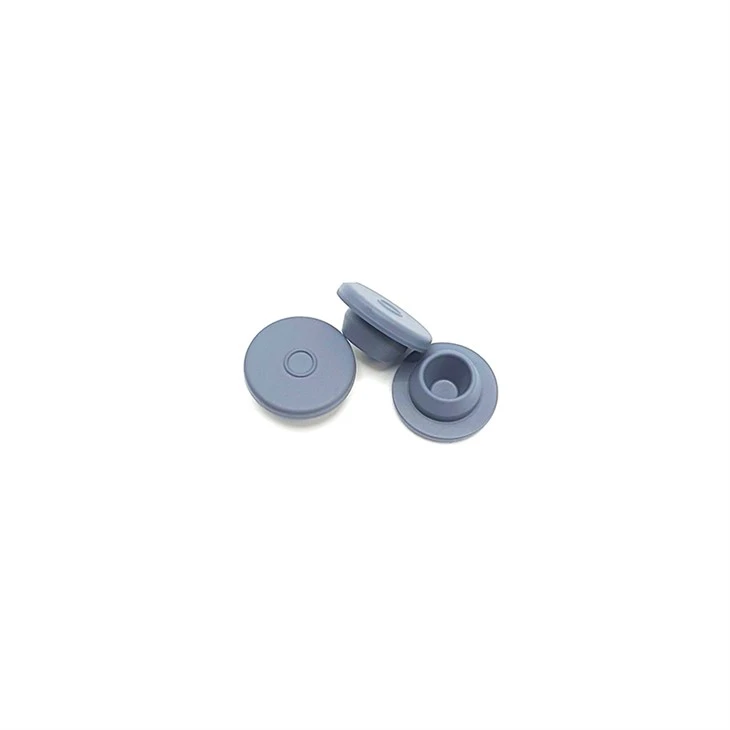
Hey there! As a supplier of gray rubber stoppers, I often get asked, "Do gray rubber stoppers have a good chemical resistance profile?" Well, let's dive right into this topic and find out.
First off, gray rubber stoppers come in various materials, and each has its own unique chemical resistance properties. One of the commonly used materials for gray rubber stoppers is butyl rubber. Butyl rubber is known for its excellent gas impermeability and good chemical resistance. It can withstand a wide range of chemicals, including acids, bases, and solvents. For example, it has good resistance to weak acids like acetic acid and weak bases like sodium hydroxide. This makes it a great choice for applications where the stopper needs to be in contact with different types of chemicals.
Another material that can be used for gray rubber stoppers is chlorobutyl rubber. Chlorobutyl rubber offers enhanced chemical resistance compared to regular butyl rubber. It has better resistance to ozone, oxygen, and some aggressive chemicals. If you're looking for a stopper that can handle more challenging chemical environments, Chlorobutyl Rubber Stopper might be a great option. It's often used in pharmaceutical and chemical industries where the risk of chemical exposure is relatively high.
Now, let's talk about the factors that affect the chemical resistance of gray rubber stoppers. The temperature plays a crucial role. Higher temperatures can accelerate chemical reactions and may reduce the effectiveness of the rubber's chemical resistance. For instance, if a gray rubber stopper made of a certain material is exposed to a chemical at room temperature, it may have good resistance. But when the temperature is increased, the chemical might start to break down the rubber more quickly.
The concentration of the chemical is also important. A low - concentration chemical may not have a significant impact on the rubber stopper, while a high - concentration one can cause swelling, cracking, or degradation. For example, a dilute solution of hydrochloric acid may not affect a butyl rubber stopper much, but a concentrated solution could damage it over time.
The duration of exposure is another key factor. If a gray rubber stopper is only in contact with a chemical for a short period, it may withstand the chemical without any visible damage. However, long - term exposure can lead to cumulative damage. So, when considering the chemical resistance of gray rubber stoppers, you need to take into account how long they'll be in contact with the chemicals.
In the pharmaceutical industry, gray rubber stoppers are widely used for vials and bottles. They need to have good chemical resistance to ensure the integrity of the drugs. For example, infusion vials require stoppers that can resist the chemicals in the infusion solutions. Infusion Rubber Stopper is designed to meet these requirements. It has to be compatible with a variety of drugs, including antibiotics, vitamins, and other injectable medications. The stopper should not leach any harmful substances into the drug, and it should also prevent the ingress of contaminants from the outside.
In the laboratory setting, gray rubber stoppers are used to seal test tubes and flasks. Different experiments involve different chemicals, so the stoppers need to be able to handle a wide range of substances. For example, in a chemistry lab, you might use a stopper to seal a flask containing an organic solvent. The stopper should not dissolve or react with the solvent.
Let's also mention bromobutyl rubber stoppers. 20mm Bromobutyl Rubber Stopper is a popular size in many industries. Bromobutyl rubber has similar properties to chlorobutyl rubber but may have some differences in chemical resistance. It offers good resistance to many chemicals and is often used in applications where high - purity and chemical stability are required.
Now, I know you might be wondering how to test the chemical resistance of gray rubber stoppers. One common method is the immersion test. In this test, a sample of the rubber stopper is immersed in the chemical of interest for a specific period at a controlled temperature. After the immersion, the sample is examined for any changes in weight, volume, hardness, or appearance. If there are no significant changes, it indicates that the stopper has good chemical resistance to that particular chemical.
Another way is to use analytical techniques such as Fourier - transform infrared spectroscopy (FTIR). This technique can be used to detect any chemical changes in the rubber at a molecular level. It can identify if there are any new chemical bonds formed or if the original chemical structure of the rubber has been altered due to the chemical exposure.
In conclusion, gray rubber stoppers can have a good chemical resistance profile, but it depends on the material they're made of, the chemical environment they're exposed to, and other factors like temperature, concentration, and duration of exposure. If you're in the market for gray rubber stoppers, it's important to consider your specific chemical requirements. Whether you need a stopper for a pharmaceutical application, a laboratory experiment, or an industrial process, we can help you find the right one.
If you're interested in purchasing gray rubber stoppers or want to learn more about their chemical resistance for your specific needs, don't hesitate to reach out. We're here to provide you with the best products and solutions. Let's start a conversation and see how we can meet your requirements.
References
- "Handbook of Elastomers" by Henry H. Hodgson
- "Rubber Technology" by Maurice Morton