

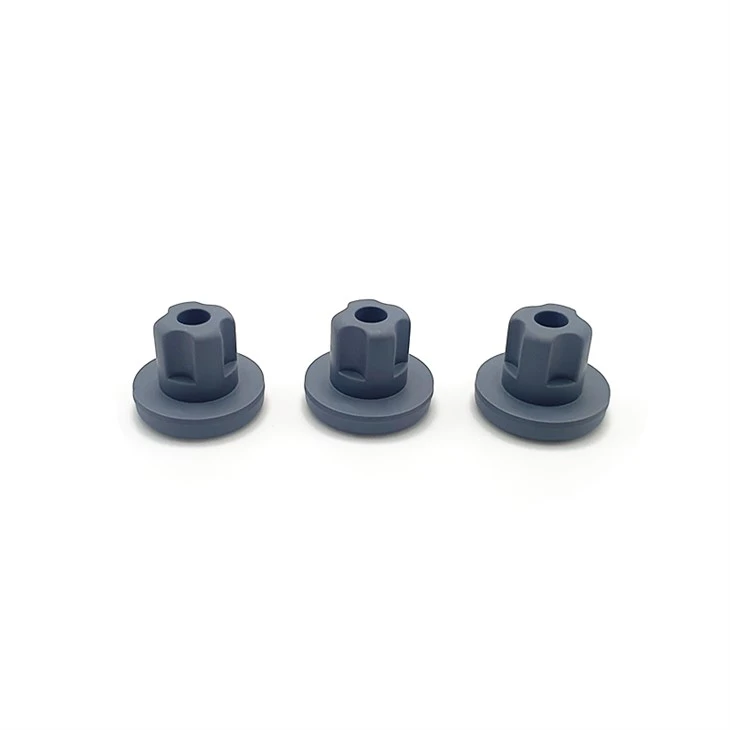
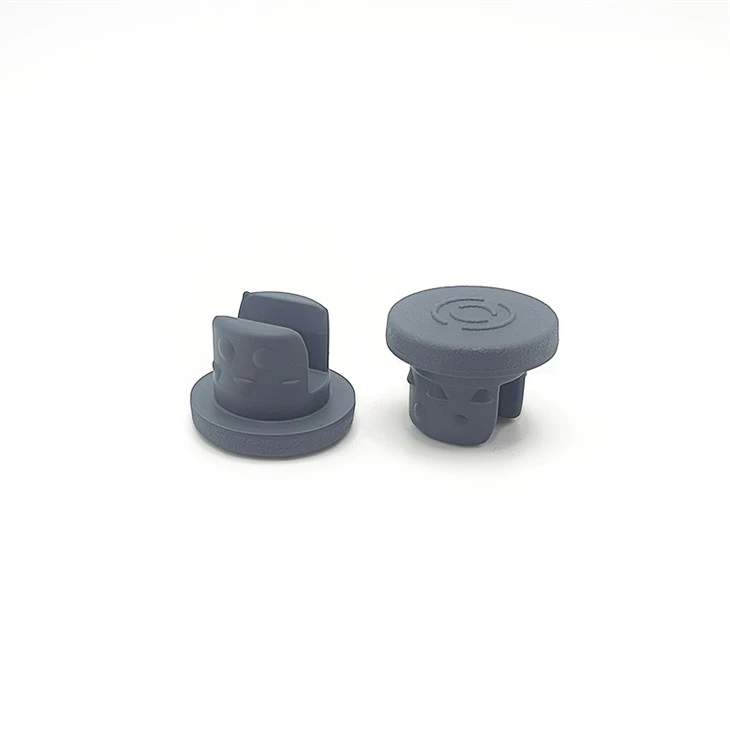
The hardness of a gray rubber stopper is a crucial characteristic that significantly impacts its performance and suitability for various applications. As a leading supplier of gray rubber stoppers, I have witnessed firsthand the importance of understanding this property to meet the diverse needs of our customers.
Understanding Rubber Hardness
Rubber hardness is typically measured using the Shore durometer scale, which classifies rubber materials based on their resistance to indentation. The Shore scale has different types, with Shore A being the most commonly used for general-purpose rubber products, including rubber stoppers. The Shore A scale ranges from 0 to 100, where a lower value indicates a softer, more flexible rubber, and a higher value represents a harder, more rigid material.
For gray rubber stoppers, the hardness can vary depending on the specific formulation and intended use. Softer rubber stoppers (Shore A 20 - 40) are often used in applications where a tight seal is required, and the stopper needs to conform to irregular surfaces. These stoppers are more flexible and can easily deform to fill gaps, making them ideal for use in laboratory glassware, such as test tubes and flasks.
On the other hand, harder rubber stoppers (Shore A 60 - 80) are better suited for applications that require more durability and resistance to compression. They are commonly used in industrial settings, such as in pumps, valves, and pipes, where they need to withstand high pressures and mechanical stress.
Factors Affecting the Hardness of Gray Rubber Stoppers
Several factors can influence the hardness of gray rubber stoppers during the manufacturing process. The type and amount of rubber compound used play a significant role. Different rubber polymers, such as natural rubber, synthetic rubber (e.g., neoprene, nitrile), and silicone, have inherent hardness properties. By blending these polymers in different ratios, manufacturers can achieve the desired hardness for the rubber stoppers.
The addition of fillers and additives also affects the hardness. Fillers, such as carbon black and silica, can increase the hardness and strength of the rubber. Plasticizers, on the other hand, are used to soften the rubber and improve its flexibility. The curing process, which involves heating the rubber compound to cross - link the polymer chains, also impacts the final hardness. The temperature, time, and pressure during curing can all be adjusted to control the degree of cross - linking and, consequently, the hardness of the rubber stoppers.
Importance of Hardness in Different Applications
In the laboratory environment, the hardness of gray rubber stoppers is critical for ensuring a proper seal. A stopper that is too soft may not provide enough resistance to prevent leakage, especially when dealing with volatile or hazardous chemicals. Conversely, a stopper that is too hard may not fit snugly into the glassware, leading to gaps and potential contamination. For example, a Rubber Stopper 20mm with the right hardness is essential for accurately measuring and storing liquid samples in test tubes.
In the pharmaceutical industry, rubber stoppers are used to seal vials containing medications. The hardness of these stoppers must be carefully controlled to ensure compatibility with the drug formulation and to prevent any interaction that could affect the stability and efficacy of the medication. A Vial Rubber Stopper 13 mm with the appropriate hardness can provide a reliable barrier against oxygen, moisture, and microorganisms, protecting the integrity of the drug.
In industrial applications, the hardness of gray rubber stoppers is related to their performance under different operating conditions. Harder stoppers are preferred in high - pressure systems, as they can withstand the forces without deforming or failing. They also offer better resistance to abrasion and wear, which is crucial for long - term use in machinery and equipment.
Quality Control of Rubber Stopper Hardness
As a supplier of gray rubber stoppers, we have a strict quality control process in place to ensure that the hardness of our products meets the specified requirements. We use calibrated Shore durometers to measure the hardness of the rubber stoppers at various stages of production. Random samples are taken from each batch, and multiple measurements are taken at different points on the stopper to ensure uniformity.
We also conduct additional tests, such as compression set and tensile strength tests, to evaluate the overall performance of the rubber stoppers. These tests help us to verify that the hardness is consistent with other important properties, such as elasticity and durability. By maintaining a high level of quality control, we can provide our customers with reliable and consistent gray rubber stoppers that meet their specific needs.
Choosing the Right Hardness for Your Application
When selecting gray rubber stoppers, it is important to consider the specific requirements of your application. If you need a stopper for a laboratory experiment, you may want to choose a softer stopper for a better seal. For industrial applications, a harder stopper may be more appropriate to withstand high pressures and mechanical stress.
Our company offers a wide range of gray rubber stoppers with different hardness levels to meet the diverse needs of our customers. Whether you are looking for a 20mm Rubber Stopper for a small - scale project or a large quantity of stoppers for an industrial application, we can provide you with the right product.
Conclusion
The hardness of a gray rubber stopper is a fundamental property that affects its performance and suitability for different applications. By understanding the factors that influence hardness and the importance of quality control, you can make an informed decision when choosing the right rubber stoppers for your needs.
If you are interested in purchasing gray rubber stoppers or have any questions about their hardness or other properties, please feel free to contact us. We are committed to providing you with high - quality products and excellent customer service. Our team of experts is ready to assist you in selecting the most suitable rubber stoppers for your specific application.
References
- ASTM D2240 - 15, Standard Test Method for Rubber Property - Durometer Hardness.
- ISO 7619 - 1:2010, Rubber, vulcanized or thermoplastic — Determination of indentation hardness — Part 1: Durometer method (Shore hardness).