

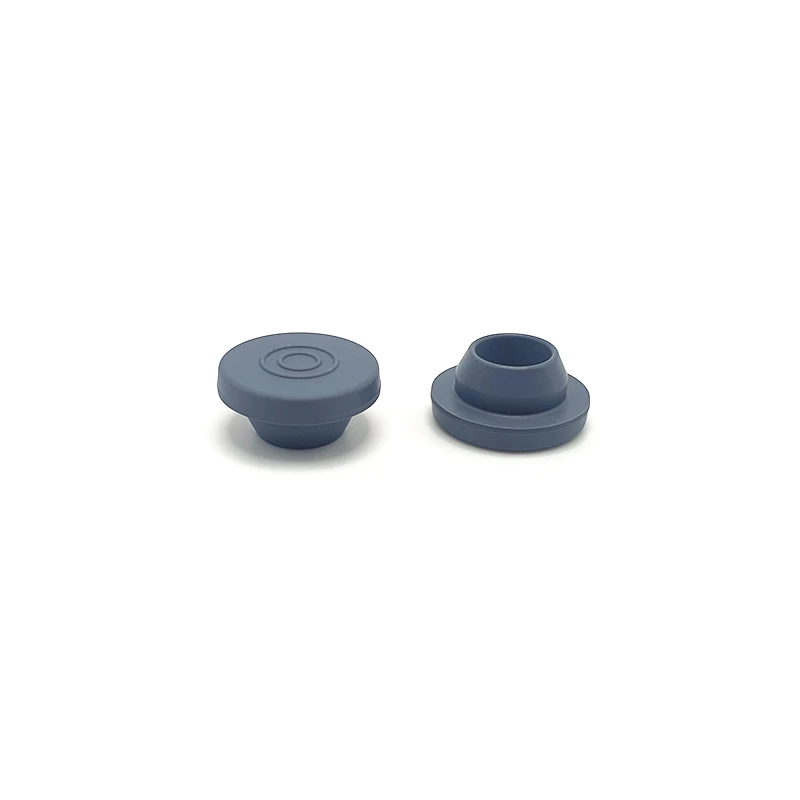
Hey there! As a supplier of gray rubber stoppers, I often get asked if these little guys have a non - toxic composition. It's a super important question, especially when you consider the various applications where rubber stoppers are used, like in laboratories, medical settings, and even some consumer products. So, let's dive right in and explore this topic.
First off, what exactly are gray rubber stoppers made of? Well, the base material for most rubber stoppers is natural or synthetic rubber. Natural rubber comes from the latex of rubber trees, while synthetic rubber is man - made through chemical processes. Gray rubber stoppers are usually made by adding certain pigments and additives to the base rubber to give them that distinct gray color.
Now, the key factor when it comes to toxicity is the additives. Some common additives in rubber stoppers include vulcanizing agents, antioxidants, and fillers. Vulcanizing agents are used to cross - link the rubber molecules, making the stopper more durable and resistant to heat and chemicals. Antioxidants prevent the rubber from breaking down over time, and fillers are added to improve the physical properties of the rubber, like its hardness and flexibility.
The good news is that in most cases, these additives are carefully selected to be non - toxic. For example, many modern rubber stoppers use zinc oxide as a vulcanizing agent. Zinc oxide is a widely used and generally recognized as safe (GRAS) substance in many industries, including food and pharmaceuticals. Antioxidants are also chosen to be non - reactive and non - toxic under normal conditions.
However, it's important to note that not all gray rubber stoppers are created equal. Some low - quality stoppers might use cheaper additives that could potentially be toxic. That's why it's crucial to source your rubber stoppers from a reliable supplier, like us. We take great care in selecting the raw materials and additives for our gray rubber stoppers to ensure they meet the highest safety standards.
Let's talk about the applications of gray rubber stoppers. In laboratory settings, they are used to seal test tubes, flasks, and other containers. You definitely don't want toxic substances leaching out into your experiments, right? Our gray rubber stoppers are designed to be inert and non - reactive with most common laboratory chemicals. This means you can trust them to keep your samples safe and your experiments accurate.
In the medical field, rubber stoppers are used in vials and infusion bottles. For instance, a 20mm Rubber Stopper is commonly used in small vials, while a 32mm Rubber Stopper for Infusion Bottle is used in larger containers. The non - toxic composition of our stoppers is crucial here, as they come into direct contact with medications and fluids that will be administered to patients. We ensure that our stoppers comply with all relevant medical regulations to guarantee patient safety.
Even in consumer products, like some types of perfume bottles or small liquid containers, gray rubber stoppers are used. Consumers expect these products to be safe for use, and that starts with the non - toxic nature of the rubber stoppers. Our Rubber Stopper Vial 20mm is a popular choice for these types of applications because of its high - quality and non - toxic composition.
To determine the toxicity of a rubber stopper, there are several tests that can be conducted. One common test is the extractables test. In this test, the rubber stopper is exposed to a variety of solvents to see what substances are extracted from it. If any potentially toxic substances are found in significant amounts, then the stopper is considered unsafe. Another test is the leachables test, which is similar but focuses on what substances are released over time when the stopper is in contact with a specific product, like a medication.
We subject all our gray rubber stoppers to these tests and more to ensure they meet the strictest safety criteria. Our quality control team is constantly monitoring the production process to make sure that every single stopper that leaves our facility is non - toxic and of the highest quality.
But how can you be sure that the gray rubber stoppers you're buying are non - toxic? Well, first of all, look for suppliers who can provide you with test reports and certificates of compliance. These documents show that the stoppers have been tested and meet the relevant safety standards. At our company, we're more than happy to share these documents with our customers.
Another thing to consider is the reputation of the supplier. Do some research online, read reviews from other customers, and see if the supplier has a history of providing high - quality, non - toxic products. We've been in the business for a long time, and we have a great track record of satisfied customers who trust our gray rubber stoppers.
In conclusion, gray rubber stoppers can have a non - toxic composition, but it really depends on the quality of the product and the manufacturing process. As a reliable supplier, we take every step possible to ensure that our gray rubber stoppers are safe for use in all applications. Whether you're a laboratory researcher, a medical professional, or a consumer product manufacturer, you can count on us to provide you with high - quality, non - toxic gray rubber stoppers.
If you're interested in purchasing our gray rubber stoppers or have any questions about their composition and safety, don't hesitate to reach out. We're always here to help you make the right choice for your needs. Let's start a conversation and see how we can work together to meet your requirements.
References

- ASTM International. (2023). Standard test methods for rubber.
- European Pharmacopoeia. (2023). Requirements for rubber closures for pharmaceutical use.
- US Food and Drug Administration. (2023). Guidance for industry: Container closure systems for packaging human drugs and biologics.