

Hey there! As a supplier of 1 ml vials, I often get asked whether these little guys are suitable for laboratory use. Well, let's dive right in and explore this topic.
First off, what exactly are 1 ml vials? They're those tiny containers that can hold up to 1 milliliter of liquid or solid substances. You can think of them as A Vial on a smaller scale. They're usually made of glass or plastic, and each material has its own set of pros and cons.
Advantages of 1 ml Vials in the Lab
1. Precision
One of the biggest perks of using 1 ml vials is precision. In a laboratory setting, accurate measurements are crucial. These vials are designed to hold a specific volume, which means you can be pretty confident that you're getting the right amount of your sample or reagent. Whether you're working on a small - scale experiment or need to store a tiny amount of a precious compound, 1 ml vials are up to the task.
2. Space - Saving
Laboratories are often cramped spaces, with limited storage. 1 ml vials are a great solution because they take up very little room. You can stack them neatly on shelves or store them in racks, making the most of your available space. They're like Small Glass Bottle that help you keep your lab organized without taking over the place.
3. Cost - Effective
When you're running a lab, costs can add up quickly. 1 ml vials are relatively inexpensive, especially when bought in bulk. This makes them a budget - friendly option for labs that need to use a large number of containers. You don't have to break the bank to get high - quality vials for your experiments.
4. Compatibility
These vials are compatible with a wide range of substances. Glass vials, for example, are resistant to many chemicals and can withstand high temperatures, making them suitable for storing and handling various reagents. Plastic vials, on the other hand, are lightweight and shatterproof, which is great for samples that need to be transported or for labs where safety is a major concern.
Disadvantages of 1 ml Vials in the Lab
1. Limited Capacity
The obvious drawback of 1 ml vials is their small capacity. If you're working on an experiment that requires a large volume of a substance, these vials won't cut it. You'll have to use multiple vials, which can be time - consuming and may increase the risk of contamination.
2. Fragility (Glass Vials)
Glass vials, while great for many applications, are fragile. They can break easily if dropped or mishandled, which can lead to the loss of your sample and potentially cause a safety hazard. This is something to keep in mind, especially if you're working in a busy lab environment.
3. Potential for Contamination
Because of their small size, 1 ml vials can be more difficult to clean thoroughly. Residues from previous samples can remain in the vial, leading to cross - contamination in subsequent experiments. This is a serious issue in labs where accurate results are essential.

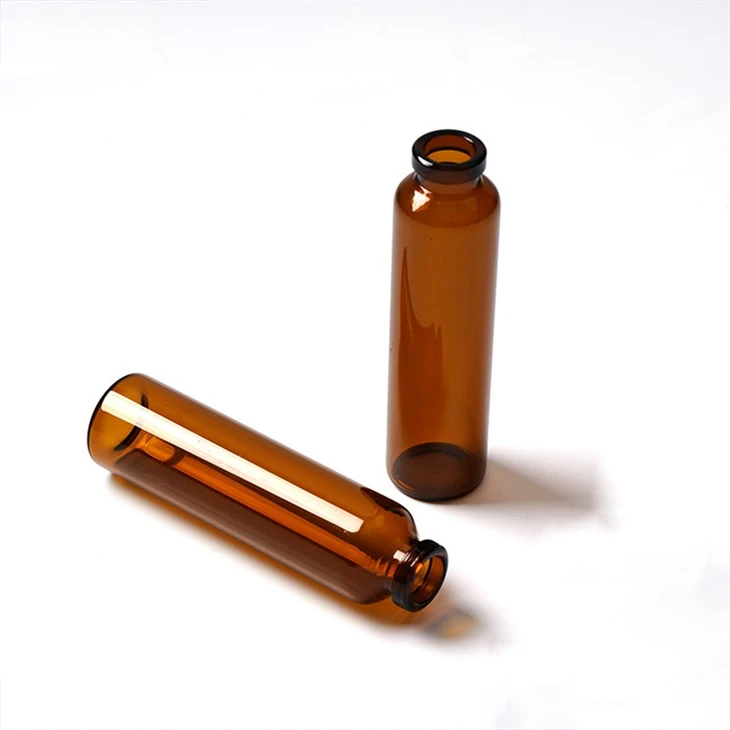
Applications of 1 ml Vials in the Lab
1. Sample Storage
1 ml vials are commonly used for storing small samples of biological, chemical, or pharmaceutical substances. They can keep samples stable for long periods, especially when stored at the right temperature. For example, DNA samples can be stored in 1 ml glass vials at low temperatures to prevent degradation.
2. Micro - Scale Experiments
In micro - scale experiments, where only a small amount of a substance is needed, 1 ml vials are ideal. They allow researchers to work with precise volumes, reducing waste and ensuring accurate results. These vials are like Mini Bottles Glass that are perfect for these kinds of detailed experiments.
3. Drug Development
In the pharmaceutical industry, 1 ml vials are used for storing and testing new drug compounds. They can hold small amounts of experimental drugs, which are then tested for efficacy and safety. This helps in the early stages of drug development, where only small quantities of the compound are available.
Factors to Consider When Choosing 1 ml Vials
1. Material
As mentioned earlier, glass and plastic are the two main materials for 1 ml vials. Glass is more chemically resistant and can withstand high temperatures, but it's fragile. Plastic is lightweight and shatterproof, but it may not be as resistant to some chemicals. Consider the nature of your samples and the requirements of your experiments when choosing the material.
2. Closure Type
The closure of the vial is also important. There are different types of closures, such as screw caps, snap caps, and septum caps. Screw caps provide a tight seal and are easy to use, while septum caps are useful for applications where you need to access the sample without removing the cap completely.
3. Quality
Make sure to choose high - quality vials. Poor - quality vials may have inconsistent volumes, rough surfaces, or may not seal properly. This can affect the accuracy of your experiments and the stability of your samples.
Conclusion
So, are 1 ml vials suitable for laboratory use? The answer is a resounding yes, but with some caveats. They offer many advantages, such as precision, space - saving, cost - effectiveness, and compatibility. However, they also have some limitations, like limited capacity and potential for contamination.
If you're running a lab and need 1 ml vials, I'd be more than happy to help. We offer a wide range of high - quality 1 ml vials that are suitable for various laboratory applications. Whether you need glass or plastic vials, we've got you covered. If you're interested in learning more or discussing your specific requirements, feel free to reach out and start a procurement discussion.
References
- "Laboratory Glassware: A Practical Guide" by John Doe
- "Plastic Containers in the Laboratory" by Jane Smith