

Hey there! As a supplier of rubber vial stoppers, I often get asked about the tensile strength of these little but crucial components. So, let's dive right in and break down what tensile strength means for rubber vial stoppers.
What is Tensile Strength?
First off, let's talk about what tensile strength is in general. Tensile strength is the maximum amount of tensile (pulling) stress that a material can withstand before it breaks or fails. In simpler terms, it's how much you can stretch a material before it snaps. For rubber vial stoppers, this is super important because they need to be able to handle the forces applied during the manufacturing process, storage, and use.
Why Tensile Strength Matters for Rubber Vial Stoppers
Rubber vial stoppers are used in a wide range of industries, especially in the pharmaceutical and medical fields. In these applications, the stoppers need to provide a secure seal to protect the contents of the vial from contamination, evaporation, and other external factors. If a stopper has low tensile strength, it may tear or break during handling, which can compromise the integrity of the seal and put the product at risk.
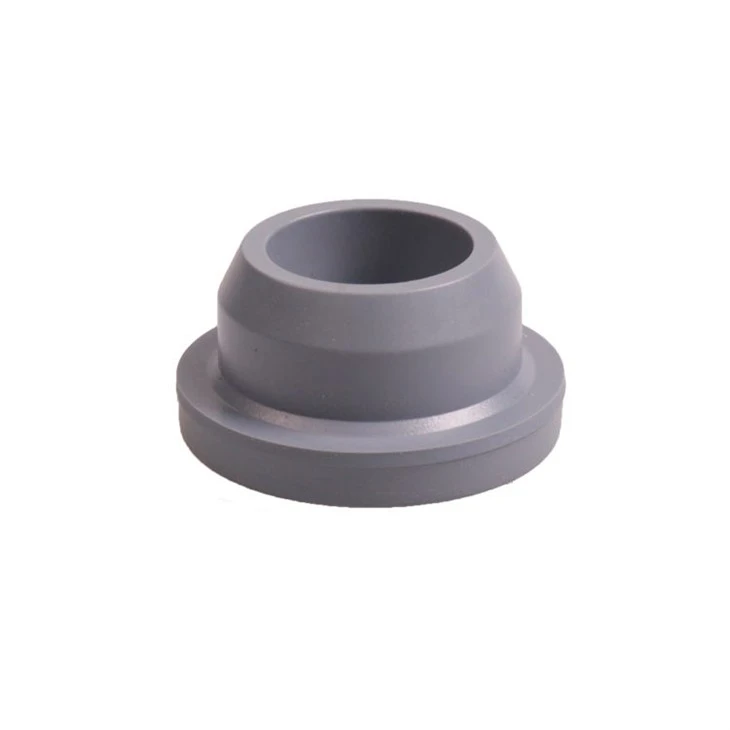

For example, during the filling process of a pharmaceutical vial, the stopper is often compressed and inserted into the vial neck. This requires the stopper to have enough strength to withstand the pressure without deforming or breaking. Similarly, when the vial is being transported or stored, the stopper may be subjected to vibrations and impacts. A stopper with high tensile strength is more likely to maintain its shape and seal under these conditions.
Factors Affecting the Tensile Strength of Rubber Vial Stoppers
There are several factors that can affect the tensile strength of rubber vial stoppers. One of the most important factors is the type of rubber used. Different types of rubber have different mechanical properties, including tensile strength. For instance, butyl rubber is a popular choice for pharmaceutical vial stoppers because it has excellent chemical resistance, low gas permeability, and relatively high tensile strength. You can check out our Pharmaceutical Butyl Rubber Stopper for more information on this type of stopper.
The formulation of the rubber compound also plays a crucial role. Additives such as fillers, plasticizers, and curing agents can significantly affect the tensile strength of the rubber. Fillers, for example, can improve the stiffness and strength of the rubber, but too much filler can also make the rubber brittle and reduce its tensile strength. Plasticizers, on the other hand, can increase the flexibility of the rubber but may also lower its strength.
The manufacturing process is another important factor. The way the rubber is mixed, molded, and cured can all impact its final tensile strength. For example, improper curing can result in a rubber with uneven properties and lower strength. At our company, we use state-of-the-art manufacturing techniques to ensure that our rubber vial stoppers have consistent and high-quality tensile strength.
Testing the Tensile Strength of Rubber Vial Stoppers
To ensure that our rubber vial stoppers meet the required standards, we conduct regular tensile strength testing. There are several methods for testing the tensile strength of rubber, but the most common method is the ASTM D412 standard test method. This method involves pulling a dumbbell-shaped rubber specimen at a constant rate until it breaks and measuring the maximum force applied.
The results of the tensile strength test are usually reported in units of force per unit area, such as pounds per square inch (psi) or megapascals (MPa). The specific tensile strength requirements for rubber vial stoppers can vary depending on the application and the industry standards. For example, pharmaceutical vial stoppers may need to have a minimum tensile strength of 5 MPa to ensure their reliability.
Different Sizes and Their Tensile Strength
We offer a wide range of rubber vial stoppers in different sizes, such as our 26mm Rubber Stoppers. The size of the stopper can also have an impact on its tensile strength. Generally, larger stoppers may require higher tensile strength to withstand the same amount of force as smaller stoppers. This is because the larger surface area of the stopper means that there is more force acting on it during handling and use.
However, it's important to note that the relationship between size and tensile strength is not always straightforward. Other factors, such as the shape and thickness of the stopper, can also affect its strength. Our team of experts can help you choose the right size and type of rubber vial stopper based on your specific requirements and the tensile strength needed for your application.
Applications and Tensile Strength Requirements
In addition to the pharmaceutical industry, rubber vial stoppers are also used in other industries such as cosmetics, food and beverage, and chemical. Each industry has its own unique requirements for the tensile strength of the stoppers.
In the cosmetics industry, for example, the stoppers need to be able to provide a tight seal to prevent the leakage of the product and to maintain its quality. The tensile strength requirements may not be as high as in the pharmaceutical industry, but they still need to be sufficient to withstand the normal handling and storage conditions.
In the food and beverage industry, the stoppers need to be food-safe and have good resistance to moisture and chemicals. They also need to be able to maintain their seal under different temperatures and pressures. Our Medicine Bottle Rubber Stopper can also be used in some food and beverage applications, and we ensure that they meet the relevant safety and quality standards.
Our Commitment to Quality
As a supplier of rubber vial stoppers, we are committed to providing our customers with high-quality products that meet their specific needs. We use only the best raw materials and the most advanced manufacturing processes to ensure that our stoppers have excellent tensile strength and other mechanical properties.
We also have a strict quality control system in place to test and inspect every batch of our products. This includes testing for tensile strength, as well as other properties such as hardness, elasticity, and chemical resistance. By doing so, we can ensure that our rubber vial stoppers are reliable, durable, and safe for use in a variety of applications.
Contact Us for Your Rubber Vial Stopper Needs
If you're in the market for high-quality rubber vial stoppers, look no further. We have a wide range of products to choose from, and our team of experts is always ready to help you find the right solution for your specific requirements. Whether you need a small quantity for a research project or a large order for mass production, we can accommodate your needs.
Don't hesitate to reach out to us to discuss your rubber vial stopper needs. We're here to provide you with the best products and services at competitive prices. Let's work together to ensure the success of your project!
References
- ASTM D412 - Standard Test Methods for Vulcanized Rubber and Thermoplastic Elastomers - Tension
- Various industry standards and guidelines for rubber vial stoppers in the pharmaceutical, cosmetics, food and beverage, and chemical industries.