

Hey there! I'm a supplier of blue glass bottles. You might be curious about what goes into making those beautiful blue glass bottles, right? Well, let me take you through the whole manufacturing process step by step.

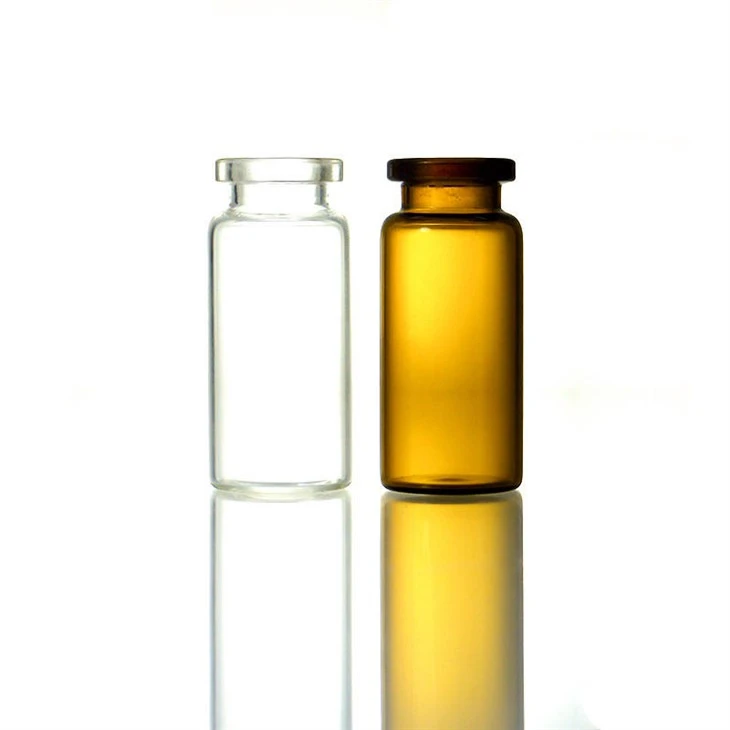
1. Raw Material Preparation
The first thing we need to do is gather all the raw materials. To make blue glass, we use a special combination. The main ingredients for glass are silica sand, soda ash, and limestone. Silica sand is the base material that forms the glass structure. Soda ash helps to lower the melting point of the silica sand, making it easier to work with. Limestone is added to improve the durability and chemical resistance of the glass.
But what gives the glass its blue color? That's where the colorants come in. For blue glass, we usually use cobalt oxide. Just a small amount of cobalt oxide can give the glass a beautiful, deep blue shade.
Once we have all these raw materials, we carefully measure them according to a specific formula. This ensures that the glass we produce has the right properties, like the right strength and the perfect blue color.
2. Melting
After the raw materials are prepared, they are loaded into a large furnace. These furnaces can get extremely hot, reaching temperatures of around 1500 - 1600 degrees Celsius. At such high temperatures, the raw materials start to melt and fuse together.
The melting process takes several hours. During this time, the chemicals in the raw materials react with each other. The soda ash breaks down the silica sand, and the limestone helps in stabilizing the glass structure. The cobalt oxide dissolves in the molten glass, giving it that characteristic blue color.
We have to monitor the furnace closely to make sure the temperature is just right. If it's too low, the glass won't melt fully, and if it's too high, the glass might start to evaporate or develop defects.
3. Shaping
Once the glass is in a molten state, it's time to shape it into a bottle. There are a few different methods we can use, but the most common one for blue glass bottles is the blow - molding process.
First, a gob of molten glass is cut from the larger mass of molten glass in the furnace. This gob is then transferred to a mold. The mold is shaped like the outside of the bottle we want to make.
In the blow - molding process, we use a blowpipe to force air into the gob of molten glass. The air expands the glass, pushing it against the walls of the mold. This gives the glass the shape of the bottle. We can make all sorts of bottle sizes and shapes, from small ones like the 1ml Glass Bottle to larger ones for different applications.
4. Annealing
After the bottle is shaped, it goes through a process called annealing. When the glass is cooled too quickly, it can develop internal stresses. These stresses can make the bottle weak and more likely to break.
So, we put the newly shaped bottles in an annealing oven. The oven is heated to a specific temperature and then slowly cooled over a period of several hours. This gradual cooling allows the glass to relax and reduces the internal stresses, making the bottle stronger and more durable.
5. Inspection
Once the bottles are annealed, it's time to inspect them. We have a team of quality control experts who check each bottle carefully. They look for any defects, such as cracks, bubbles, or uneven walls.
We use different inspection methods. Visual inspection is the first step. The inspectors look at the bottles under bright lights to spot any obvious flaws. We also use more advanced techniques, like using special machines to check the thickness of the bottle walls.
If a bottle doesn't meet our quality standards, it's taken out and recycled. We believe in only supplying the best - quality blue glass bottles to our customers.
6. Finishing
After passing the inspection, the bottles go through some finishing steps. This might include cleaning the bottles to remove any dirt or debris that might have accumulated during the manufacturing process.
We can also add some additional features to the bottles. For example, we can add labels or markings. If the bottles are going to be used as Small Medicine Bottle or Medicine Packaging Bottle, we can print important information like dosage instructions or product names on the bottles.
7. Packaging
Finally, the finished blue glass bottles are ready to be packaged. We use high - quality packaging materials to protect the bottles during transportation. The bottles are usually packed in boxes, and we add some cushioning material to prevent them from getting damaged.
We take great care in packaging because we know how important it is to deliver the bottles to our customers in perfect condition.
So, there you have it - the whole manufacturing process of a blue glass bottle. It's a complex process that requires a lot of skill and precision, but we're really good at it. If you're in the market for blue glass bottles, whether it's for medicine packaging, cosmetics, or any other use, we'd love to have a chat with you. We can offer you high - quality products at competitive prices. Don't hesitate to reach out for a purchase negotiation.
References
- Glass Manufacturing Handbook
- Encyclopedia of Glass Science and Technology