


Your Professional Medicine Bottle Manufacturer in China!
Xinxiang Hongfu Bottle Cap Manufacturing Co., Ltd. was established in 2008 with a registered capital of 5 million yuan. In 2013, we were the first in the industry to adopt new production technology, successfully passed inspections from the State Food and Drug Administration twice, and obtained GMP pharmaceutical packaging material certificates. We provide customers in the pharmaceutical and cosmetics industries with high-quality products, including aluminum caps, aluminum-plastic caps, medical glass bottles, and butyl rubber stoppers.
Why Choose Us
Diverse products
Our company has a wide range of products, mainly producing various aluminum plastic caps for antibiotic bottles, oral liquid bottle caps, easy-pierce aluminum caps for oral liquid bottles, various anti-theft aluminum caps, rubber stoppers, medical glass bottles, etc.
Advanced equipment
The fully automatic rivet filling and testing all-in-one machine we own is currently the most advanced production equipment in the industry. From bottle cap riveting, filling, computer detection, counting, the process is completed in one go, significantly improving product quality and efficiency. The production line has a production capacity of 60,000 to 80,000 pieces per hour, and the product qualification rate is 100%.
Broad market
50% of our products are sold domestically, and 50% are exported to more than 20 countries including Southeast Asia, Europe, North America, and South America.
Excellent service
We have 12 hours of online customer service every day to answer your questions about the product. If you have any questions within 7 days of receiving the goods, please contact us and we will compensate or resend. Our customer service will also follow up on product usage.
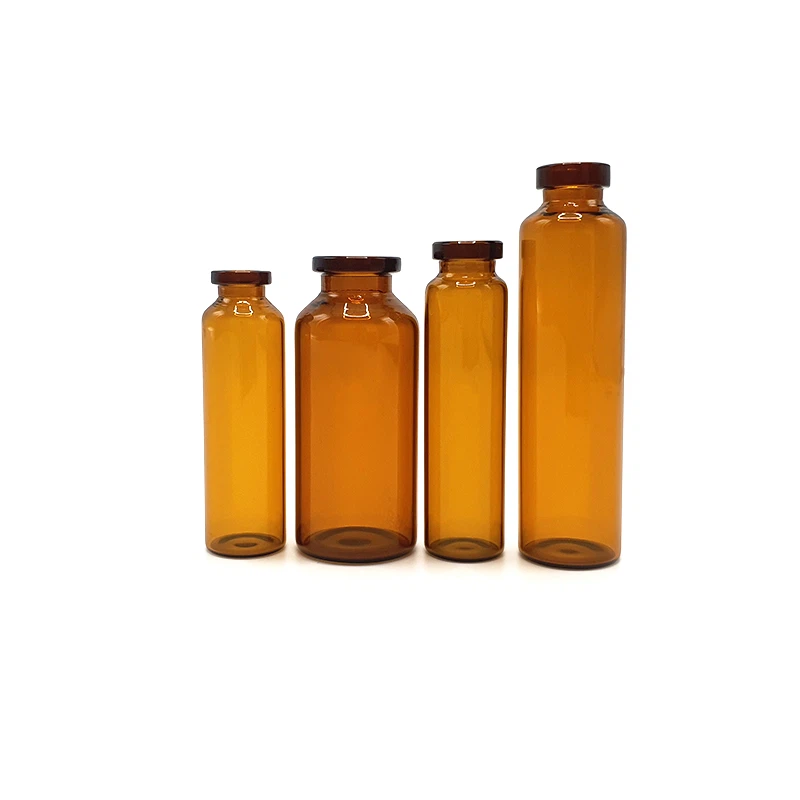
The Glass Vial is a small, flat-bottom, glass container with a CT thread neck finish. It is commonly used for medical and scientific purposes. Its skinny or short body is perfect for containing small amounts of liquid or powder substances. Use the darker colored bottles to protect your product from sunlight and UV rays.

Amber glass is made by melting iron, sulphur, and carbon together and adding it to the resulting molten mix. These ingredients give amber glass its well-known hue: a rich, dark umber that reminds many of a tasty brew. The amber glass protects the contents from light, so that's why it's dark.

Butyl rubber stopper is obtained by co-polymerization of isobutylene and isoprene, which come from petroleum. It has a very good impermeability to gas and steam, good resistance to oxidization, ozone, acid and base but poor mechanical properties. Butyl stoppers are therefore used for packing very high hygroscopic powders or lyophilized products or highly oxidizable items. Occasionally, it is used for some applications, such as syringe plungers and droppers.

A vial rubber stopper 13 mm used on a vial serves several critical functions, and its design and composition are carefully chosen to ensure the safe and effective storage and transportation of various substances, particularly in the fields of chemistry, pharmacy, and laboratory work.

Aluminum bottle caps are used for closing or sealing the top opening of a bottle. They are designed to contain the product inside the container without external leaks and ensure that the quality of the product is maintained. Some bottle caps are designed to dispense liquid products like condiments, oils, sauces, etc. They find wide use in food and beverage, FMCG, pharmaceutical and chemical industries. They have a wide range of temperature tolerance and are resistant to fracture from impact.

Aluminium Caps For Glass Bottles
Aluminum caps for glass bottles are typically made from aluminum, which is a lightweight and durable metal. Aluminum is commonly used in the production of bottle caps due to its corrosion resistance and ability to be easily formed into the desired shape. It is also a recyclable material, making it an environmentally friendly choice for packaging. An aluminum caps for glass bottles is a closure for the top opening of a bottle. A cap is sometimes colorfully decorated with the logo of the brand of contents.
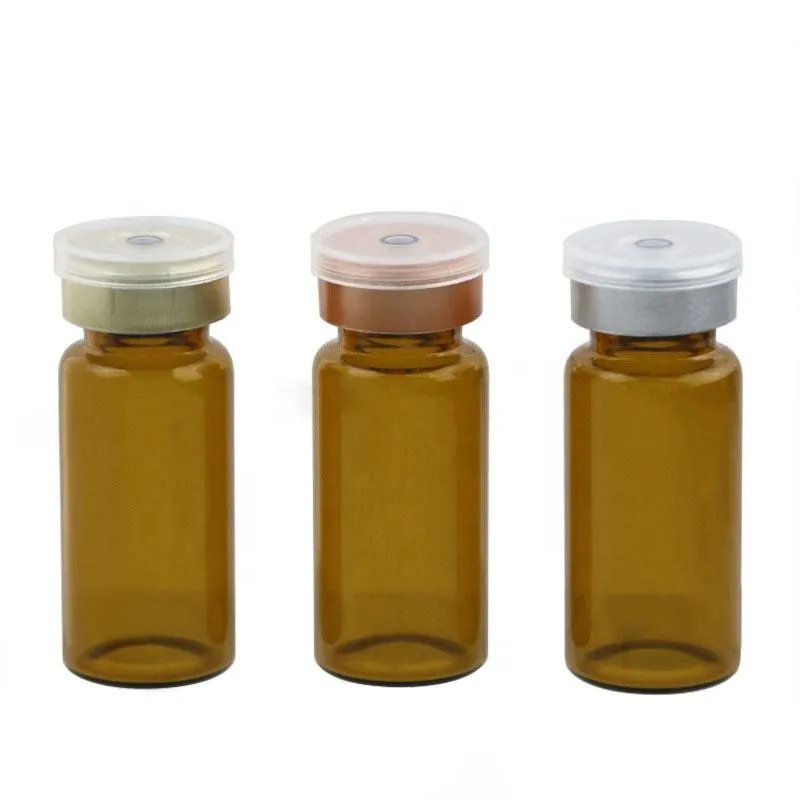
The Amber Medicine Glass Bottle is a versatile and practical solution for the storage of medicines. These bottles are made of high-quality glass that is designed to protect the contents from light and other environmental factors, thus ensuring their potency and effectiveness. The amber color of the glass provides additional protection by filtering out harmful UV rays.

In today's world, medicine packaging has become increasingly important as people seek reliable and superior-quality packaging for their life-saving medicines. Glass bottles are one of the most popular and effective types of medicine packaging bottles that have been used for centuries.

The use of freeze-dried powder bottles in the medical industry has become increasingly popular due to their ability to preserve the quality and efficacy of medical products. The bottles are made of high-quality materials and are designed to withstand extreme conditions such as freezing temperatures, heat, and pressure.

Medicine bottle mainly refers to the glass packaging containers used for direct contact with medicines, such as ampoules, antibiotic bottles, infusion bottles, pharmaceutical bottles, etc., which occupies a large proportion in the field of pharmaceutical packaging materials. The medicinal bottle has the excellent characteristics of cleanliness, hygiene, beauty, high chemical stability, airtightness, easy sealing, and keeping the properties of the contents (liquid) unchanged, and has irreplaceable performance and advantages. The production of medicinal bottle has now reached the level of full automation in every production process from raw material batching, melting, forming, annealing, processing, inspection, and packaging.
Types of Medicine Bottles
Plastic Medicine Bottles
Plastic medicine bottles are lightweight, durable, and affordable, making them a popular choice for packaging medication. They are available in a range of sizes and shapes, making it easy to find one that suits your needs. Plastic bottles are also easier to transport than glass bottles, as they are less likely to break during transit. However, plastic bottles have some downsides. They can be permeable to gases and moisture, which can affect the quality and stability of some medications. This is particularly true for medications that are sensitive to light, heat, or moisture. In addition, plastic bottles may not provide adequate protection against tampering.
Glass Medicine Bottles
Glass medicine bottles are a popular choice for medications that require protection from light, moisture, and other external factors. Glass is non-permeable, which means it provides a better barrier against gases and moisture. It also has a higher resistance to temperature changes, making it a better choice for medications that require refrigeration. However, glass bottles are more fragile and heavier than plastic bottles, making them more challenging to transport. They are also more expensive than plastic bottles, which can be a significant factor when packaging large quantities of medication.
Child-Resistant Medicine Bottles
Child-resistant medicine bottles are designed to prevent children from accessing medication. They are available in both plastic and glass, and they come in a variety of sizes and shapes. Child-resistant closures typically require the user to push down and twist to open the bottle, which can be challenging for children to do. It is important to note that child-resistant packaging does not mean child-proof. Children can still access medication if the bottle is left open or if they are left unattended with the bottle.
Tamper-Evident Medicine Bottles
Tamper-evident medicine bottles are designed to provide evidence of tampering. They typically have a seal or breakable band that must be broken to access the medication. Once the seal or band is broken, it cannot be resealed, indicating that the bottle has been opened. Tamper-evident packaging helps ensure the safety and integrity of medication, particularly for medications that are prone to abuse.
Benefits of Medicine Bottle
Enhancing Product Stability
When it comes to pharmaceutical products, stability is of utmost importance. Medicines, particularly those that are heat-sensitive or vulnerable to light exposure, require packaging that offers optimal protection from external factors. Glass medicine bottles excel in this aspect, providing a stable and controlled environment that safeguards the potency and effectiveness of the medications within. The non-porous nature of glass prevents moisture and oxygen from permeating the bottle, ensuring that the integrity of the medicine is maintained. Additionally, glass has superior resistance to temperature variations, thereby further protecting the contents from degradation and maintaining their efficacy. Research has consistently shown that glass medicine bottles provide better stability than their plastic counterparts, guaranteeing that the medications remain potent and efficacious from the point of manufacture to the patient's hands.
Promoting Sustainability
In an era where environmental concerns are at the forefront, the use of glass medicine bottles is a step towards promoting sustainability within the healthcare industry. The recyclability and reusability of glass bottles significantly reduce the burden on landfills, conserving natural resources and minimizing the carbon footprint.
Improving Aesthetic Appeal
In addition to their functional advantages, glass medicine bottles also offer a distinct aesthetic appeal. The transparency of glass allows patients to easily identify the medicine, check the level of dosage remaining, and ensure they are taking the correct medication. This transparency not only enhances patient safety but also promotes ease of use and compliance. Furthermore, glass bottles can be easily customized with labels and branding, providing an opportunity for pharmaceutical companies to reinforce their identity and establish a lasting impression on patients. The sleek and professional appearance of glass medicine bottles instills confidence in the quality and effectiveness of the enclosed medication. Through the seamless combination of form and function, glass medicine bottles protect the medication.
Application of Medicine Bottle
Domestic large infusion packaging to glass medicine bottle. Plastic infusion containers gradually increase, but high-quality lightweight II infusion bottles still have a certain competitive advantage. Glass medicine bottle has the characteristics of smooth and transparent, easy disinfection, corrosion resistance, high temperature resistance, good sealing performance and so on, and is still the preferred packaging of ordinary infusion agent.
Oral liquid preparations are mostly health care products, most of which are packaged in medicine bottle, mainly white and brown medicine bottles and molded brown medicine bottles.
In recent years, tablet and capsule packaging has been replaced by plastic bottles, aluminum foil and other materials, but high-quality lightweight and light-resistant yellow or white glass medicine bottles still have its irreplaceable advantages and development space.
Powder injection is one of the five major pharmaceutical preparations in China, mainly composed of all kinds of antibiotic drugs, and its packaging is mainly molded injection bottles and controlled injection bottles. At present, mold injection bottles account for 70% to 80% of the domestic injection packaging, and controlled injection bottles account for 20% to 30%. The former is characterized by stable size and high strength. The latter is characterized by light weight and good appearance transparency.
Benefits of Glass Medicine Bottles
Glass bottles are known for their exceptional ability to protect medications from light exposure. Light, especially ultraviolet (UV) light, can break down certain medications, rendering them ineffective. Glass acts as a reliable barrier, blocking harmful light rays from reaching the medication. Additionally, glass bottles are less likely to interact chemically with medication, ensuring the purity and stability of the drug. Moreover, glass prescription bottles are environmentally friendly and recyclable. They can be reused or repurposed, reducing waste and contributing to a greener planet. Glass also provides an aesthetic appeal, lending a sense of sophistication to your medicine cabinet.
Potential Drawbacks of Glass Bottles
While glass bottles offer numerous advantages, they are not without their drawbacks. One notable disadvantage is their fragility. Glass bottles are more prone to breakage compared to their plastic counterparts. This fragility can be a concern, especially when traveling or when there is a risk of accidental drops or impacts. Additionally, glass bottles tend to be heavier, which may be a consideration for individuals with limited dexterity.
Advantages of Plastic Medicine Bottles
Plastic medicine bottles are lightweight, making them convenient for individuals who need to carry their medications with them throughout the day. Their durability also makes them less susceptible to breakage, providing peace of mind in situations where accidental drops or impacts may occur. Additionally, plastic bottles are often more cost-effective compared to glass bottles, making them a budget-friendly choice. Furthermore, plastic bottles are available in various colors, allowing for easy differentiation between different medications. This feature can be especially helpful for individuals who take multiple medications or caregivers who need to manage medications for others.
Possible Disadvantages of Plastic Medicine Bottles
While plastic Medicine bottles come with their advantages, there are a few considerations to keep in mind. Plastic bottles may not be as effective in blocking light as glass bottles, potentially compromising the stability of light-sensitive medications. It is essential to store plastic bottles in a cool, dark place to minimize light exposure. Additionally, plastic bottles can potentially interact with certain medications, leading to chemical changes that may affect the drug's potency.
4-Step Ordering Process
Step 1: Submit A Quote Request
The process for custom medicine bottles development begins with a quote request. You can submit a quote request telling us what you're looking to have produced and we can then provide you with a quote on how much your custom product order would cost.
Step 2: Send Over Your Design
If the quote looks good to you, the next step will be sending us the custom design you want added to your custom medicine bottle. Ideally, your design will be in an Adobe Illustrator (.ai) or encapsulated postscript (.eps) format, but we can help you convert the file for free if it isn't. If you don't have a design created, we can help you create a design at no cost!
Step 3: Review The Proof
Once we have your custom design, we'll then create a proof for you to review so that you can see what your design will look like on your new custom medicine bottle. If you approve of the proof, we'll then send you an invoice before beginning production.
Step 4: Production & Delivery
Once your invoice is paid, we'll begin production. We'll deliver your custom medicine bottles straight to you after production. If you don't have the storage for your whole order, we can store a portion of your order for you until you need it.
Our Factory
In 2018, the total investment in our factory exceeded 30 million yuan, and the new factory covers an area of 31 acres. Among them, more than 10 million yuan was invested to build 10,000-level purification workshops, laboratories, and fully automated production lines. Now our factory's annual production capacity has reached 6 billion units, and the 11 fully automatic computer inspection machines we have been currently the most advanced in the industry.

Ultimate FAQ Guide to Medicine Bottle
Hot Tags: small medicine bottle, China small medicine bottle manufacturers, suppliers, factory, wholesale glass bottle, oval glass bottle, cosmetics glass bottles, sauce glass bottle, stoppered glass bottle, lotion glass bottles


