

As a dedicated penicillin bottle supplier, I understand the critical importance of ensuring the quality and safety of our products. One of the most crucial aspects of penicillin bottle production is the inspection for foreign particles. These particles can compromise the integrity of the medication inside the bottle, posing serious risks to patients. In this blog post, I will delve into the various methods and technologies we use to inspect penicillin bottles for foreign particles during production.
Visual Inspection
Visual inspection is the most basic and traditional method of detecting foreign particles in penicillin bottles. This process involves trained operators carefully examining each bottle under proper lighting conditions. They look for any visible particles such as glass fragments, rubber debris, or other contaminants that may be present in the bottle or the liquid inside.
However, visual inspection has its limitations. It is highly subjective and relies on the operator's experience and concentration. Small particles or particles that blend in with the liquid can be easily missed. Additionally, visual inspection is time - consuming and not suitable for high - volume production. To overcome these limitations, we also employ more advanced inspection techniques.
Manual Rotation and Inspection
In some cases, manual rotation of the penicillin bottle is used in conjunction with visual inspection. The operator holds the bottle and gently rotates it to make the liquid inside move. This movement can cause the foreign particles to float or move, making them more visible. Manual rotation can enhance the effectiveness of visual inspection, especially for detecting particles that are settled at the bottom of the bottle.
Machine - Vision Inspection Systems
Machine - vision inspection systems have revolutionized the way we inspect penicillin bottles for foreign particles. These systems use high - resolution cameras and sophisticated software algorithms to detect even the smallest particles. The bottles are passed through a conveyor system, and the cameras capture images of each bottle from multiple angles.
The software then analyzes these images to identify any foreign particles based on their size, shape, color, and contrast with the background. Machine - vision inspection systems are highly accurate and can detect particles as small as a few micrometers. They are also very fast, capable of inspecting hundreds of bottles per minute, making them ideal for high - volume production.
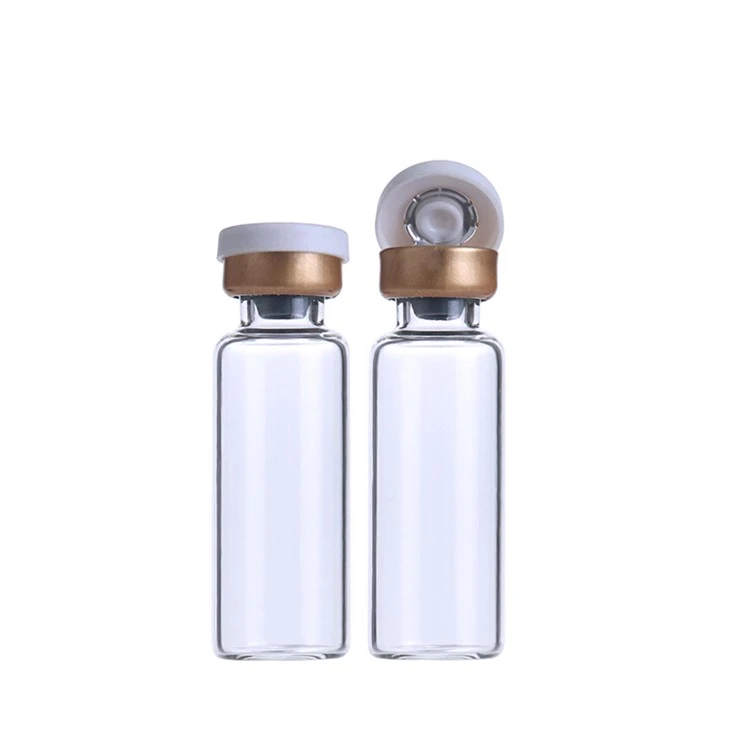

Laser - Based Inspection
Laser - based inspection is another advanced technology used in our production process. Laser beams are directed at the penicillin bottles as they move along the conveyor. When a foreign particle is present in the path of the laser beam, it scatters the light. Sensors detect the scattered light, and the system can determine the presence, size, and location of the particle.
Laser - based inspection is particularly effective for detecting transparent or semi - transparent particles that may be difficult to detect using other methods. It is also non - contact, which means it does not damage the bottles during the inspection process.
Ultrasonic Inspection
Ultrasonic inspection is based on the principle that foreign particles in a liquid can cause changes in the ultrasonic waves passing through it. Ultrasonic transducers emit high - frequency sound waves into the penicillin bottle. When a foreign particle is present, it reflects or absorbs the ultrasonic waves, causing a change in the signal received by the sensors.
This change in the signal is analyzed by the inspection system to determine the presence of foreign particles. Ultrasonic inspection is useful for detecting particles that are suspended in the liquid and can provide information about the size and density of the particles.
Air - Jet Sorting
After the inspection process, if a bottle is found to contain foreign particles, it needs to be removed from the production line. Air - jet sorting is a common method used for this purpose. Once the inspection system identifies a defective bottle, a high - pressure air jet is activated, which blows the defective bottle off the conveyor and into a rejection bin.
This ensures that only bottles that meet our strict quality standards are sent for further processing and packaging.
Importance of Regular Maintenance and Calibration
To ensure the accuracy and reliability of our inspection equipment, regular maintenance and calibration are essential. Our machine - vision systems, laser - based inspectors, and other inspection equipment are regularly serviced by trained technicians. Calibration is carried out using standard samples with known particle sizes and characteristics to ensure that the equipment is detecting particles correctly.
Quality Control and Traceability
In addition to using advanced inspection technologies, we also have a comprehensive quality control system in place. Every batch of penicillin bottles is tracked from the raw material stage to the final product. We maintain detailed records of the inspection results, including the number of defective bottles, the type of particles detected, and the location in the production process where the defects were found.
This traceability allows us to identify any potential issues in our production process and take corrective actions to prevent similar problems in the future.
Our Product Range
As a penicillin bottle supplier, we offer a wide range of products to meet the diverse needs of our customers. In addition to standard penicillin bottles, we also supply Glass Injection Vials, Flip Cap Amber Bottles, and Medical Bottles with Rubber Stopper. All our products undergo the same rigorous inspection process to ensure the highest quality and safety.
Conclusion
Inspecting penicillin bottles for foreign particles during production is a multi - step and highly technical process. We use a combination of traditional and advanced inspection methods to ensure that every bottle we supply is free from contaminants. Our commitment to quality and safety is unwavering, and we continuously invest in the latest technologies and training to improve our inspection processes.
If you are in the market for high - quality penicillin bottles or any of our other products, we would be delighted to discuss your requirements. Contact us today to start a procurement negotiation and experience the difference of working with a reliable and quality - focused supplier.
References
- "Pharmaceutical Packaging Technology" by Kenneth G. Pitt
- "Inspection Technology for Pharmaceutical Products" by John S. Smith
- Industry standards and guidelines from relevant regulatory bodies.