

Hey there! As a supplier of rubber stoppers, I often get asked, "Do rubber stoppers have different shapes?" You bet they do! In this blog, I'll walk you through the various shapes of rubber stoppers, their uses, and why these shapes matter in different industries.
Let's start with the basics. Rubber stoppers are used to seal containers, preventing the contents from leaking out or contaminants from getting in. They're made from different types of rubber, like natural rubber, synthetic rubber, and butyl rubber. Each type has its own properties, but today, we're focusing on the shapes.
One of the most common shapes is the cylindrical shape. These stoppers are straightforward and simple. They're designed to fit snugly into the opening of a container, creating a tight seal. Cylindrical rubber stoppers are used in a wide range of applications, from laboratories to industrial settings. In labs, they're used to seal test tubes and vials, keeping chemicals and samples safe. In industries, they can be used to seal pipes and containers that hold liquids or gases. For example, a 20mm Rubber Stopper in a cylindrical shape is a popular choice for small vials in pharmaceutical labs. It's just the right size to fit the vial opening and provides a reliable seal.
Another common shape is the conical shape. Conical rubber stoppers are tapered, which means they're wider at one end and narrower at the other. This shape allows for a more precise fit, especially in containers with tapered openings. They're often used in glassware, like Erlenmeyer flasks and burettes. The conical shape ensures a tight seal, even when the container opening isn't perfectly round. In a chemical lab, a conical rubber stopper can be used to seal a flask during a reaction, preventing any fumes or liquids from escaping. This type of stopper is also great for applications where you need to insert a tube or a pipette through the stopper. The tapered shape makes it easier to create a hole in the stopper without compromising the seal.
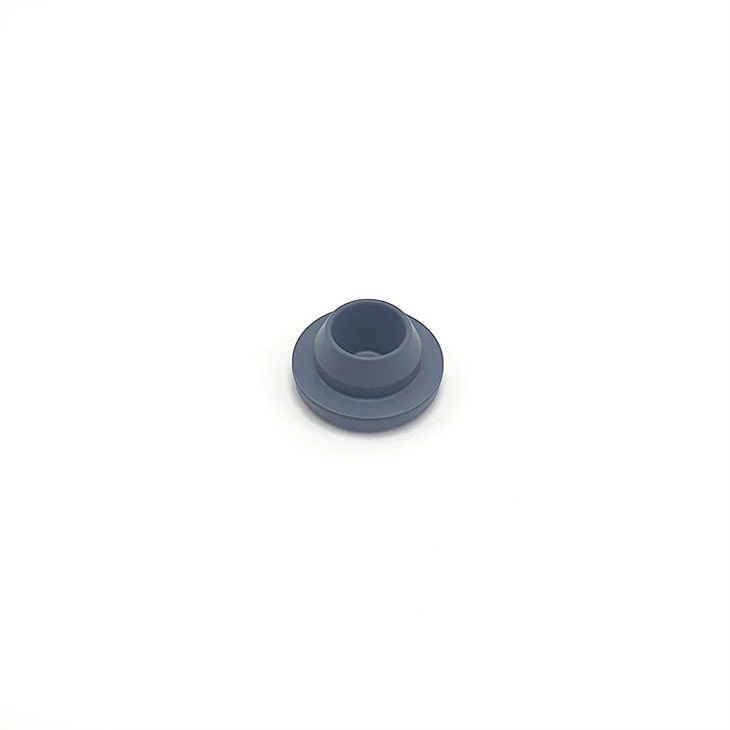

There are also flanged rubber stoppers. These stoppers have a flat, disc - shaped flange at one end. The flange serves as a barrier, preventing the stopper from being pushed too far into the container. Flanged rubber stoppers are commonly used in applications where you need to remove and replace the stopper frequently. For example, in the food and beverage industry, they can be used to seal bottles. The flange makes it easy to grip the stopper and pull it out when needed. It also provides an extra layer of protection against leakage, as the flange sits on top of the container opening.
Now, let's talk about some specialized shapes. There are rubber stoppers with holes in them. These are used when you need to insert something, like a thermometer, a gas tube, or a stirring rod, into the container while still maintaining a seal. For instance, in a scientific experiment, a rubber stopper with a hole can be used to insert a thermometer into a flask to measure the temperature of a liquid inside. The hole is usually sized to fit the object being inserted, and the rubber around the hole provides a tight seal.
Some rubber stoppers are designed with multiple holes. These are used in more complex setups, like in a distillation apparatus. In a distillation process, you might need to insert a condenser tube, a thermometer, and a gas inlet tube all at once. A rubber stopper with multiple holes allows you to do this while keeping the system sealed.
The shape of a rubber stopper also depends on the material it's made from. For example, Chlorobutyl Rubber Stopper is known for its excellent chemical resistance and low permeability. It can be made into various shapes, including the ones we've discussed. Chlorobutyl rubber stoppers are often used in the pharmaceutical industry, where they need to seal containers that hold sensitive drugs. The shape of the stopper is carefully designed to ensure a perfect fit and a long - lasting seal.
In the pharmaceutical industry, the shape of the rubber stopper is crucial. A Rubber Stopper Vial 20mm needs to be precisely shaped to fit the vial opening. Any irregularities in the shape can lead to leakage, which can be a serious problem when dealing with expensive and life - saving drugs. The stopper also needs to be able to withstand the sterilization process without losing its shape or seal.
In the medical field, rubber stoppers are used in syringes and vials. The shape of the stopper in a syringe is designed to fit snugly inside the barrel and move smoothly when the plunger is pushed or pulled. This ensures accurate dosing of medications. In vials, the stopper needs to be easy to pierce with a needle while still maintaining a seal after the needle is removed.
So, why do these different shapes matter? Well, different industries have different requirements. The shape of the rubber stopper is tailored to meet those requirements. Whether it's providing a tight seal, allowing for the insertion of objects, or withstanding certain processes, the shape plays a vital role.
As a rubber stopper supplier, I understand the importance of getting the shape right. We have a wide range of rubber stoppers in different shapes, sizes, and materials to meet the diverse needs of our customers. Whether you're in the pharmaceutical, medical, food and beverage, or scientific research industry, we've got the right rubber stopper for you.
If you're in the market for rubber stoppers and want to discuss your specific needs, I'd love to hear from you. We can work together to find the perfect shape and material for your application. Don't hesitate to reach out and start a conversation about your rubber stopper requirements.
References:
- ASTM International standards on rubber stoppers
- Industry publications on pharmaceutical packaging
- Scientific research papers on the use of rubber stoppers in laboratories