

As a long - standing rubber stopper supplier, I've encountered numerous inquiries from clients regarding the performance of rubber stoppers under various environmental conditions. One question that frequently surfaces is: "Are rubber stoppers resistant to UV light?" This blog post aims to delve deep into this topic, offering a comprehensive understanding for those in the market for high - quality rubber stoppers, such as Glass Vial Rubber Stopper, Injection Rubber Stopper, and Rubber Stopper 20mm.
Understanding UV Light and Its Effects on Materials
Ultraviolet (UV) light is a part of the electromagnetic spectrum with wavelengths shorter than visible light but longer than X - rays. It is divided into three main types: UVA (320 - 400 nm), UVB (280 - 320 nm), and UVC (100 - 280 nm). UVC is mostly absorbed by the Earth's atmosphere, while UVA and UVB reach the Earth's surface and can have significant impacts on materials.
When materials are exposed to UV light, a series of chemical reactions can occur. UV radiation can break chemical bonds within the material, leading to changes in its physical and chemical properties. These changes can manifest as discoloration, embrittlement, loss of elasticity, and reduced mechanical strength.
Rubber Stoppers and Their Composition
Rubber stoppers are typically made from various types of rubber, including natural rubber, synthetic rubber (such as butyl rubber, silicone rubber, and neoprene), and blends of different rubbers. Each type of rubber has its own unique set of properties, which determine its resistance to UV light.
Natural Rubber
Natural rubber is derived from the latex of rubber trees. It has excellent elasticity and sealing properties. However, natural rubber is highly susceptible to UV degradation. The double bonds in its molecular structure are easily broken by UV light, leading to rapid deterioration. When exposed to UV light, natural rubber can turn yellow, become brittle, and lose its sealing ability over time.
Butyl Rubber
Butyl rubber is a synthetic rubber known for its low gas permeability and excellent chemical resistance. It has better UV resistance compared to natural rubber. The saturated hydrocarbon backbone of butyl rubber makes it less prone to the bond - breaking effects of UV light. However, prolonged exposure to intense UV radiation can still cause some degree of degradation, such as surface cracking and loss of flexibility.
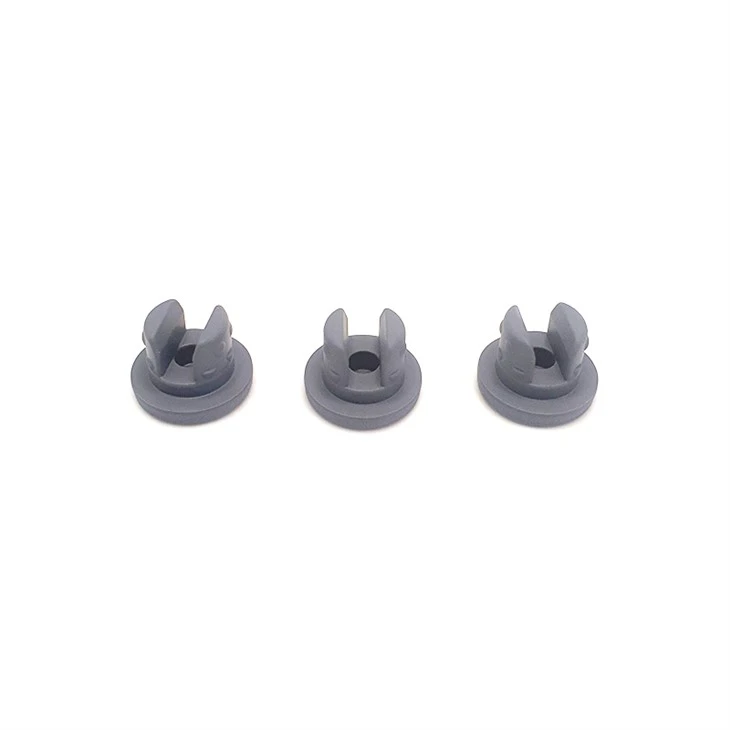

Silicone Rubber
Silicone rubber is widely used in various industries due to its high - temperature resistance, flexibility, and biocompatibility. It has excellent UV resistance. The silicon - oxygen bonds in silicone rubber are relatively stable and less likely to be broken by UV light. Silicone rubber can maintain its physical and chemical properties even after long - term exposure to UV radiation, making it a suitable choice for applications where UV resistance is crucial.
Neoprene
Neoprene, also known as polychloroprene, is a synthetic rubber with good resistance to oil, ozone, and UV light. It contains chlorine atoms in its molecular structure, which enhance its stability against UV radiation. Neoprene rubber stoppers can withstand UV exposure for extended periods without significant degradation, although they may still experience some minor changes in color and surface texture.
Factors Affecting the UV Resistance of Rubber Stoppers
In addition to the type of rubber used, several other factors can influence the UV resistance of rubber stoppers.
Additives
Many rubber stoppers are formulated with additives to enhance their performance. UV stabilizers are commonly added to rubber compounds to protect against UV degradation. These stabilizers work by absorbing or dissipating UV energy, preventing it from breaking the chemical bonds in the rubber. Carbon black is another additive that can improve UV resistance. It acts as a physical barrier, shielding the rubber from UV light.
Thickness
The thickness of the rubber stopper can also affect its UV resistance. Thicker rubber stoppers provide more material to absorb and dissipate UV energy, reducing the impact on the inner layers of the rubber. As a result, thicker stoppers are generally more resistant to UV degradation than thinner ones.
Environmental Conditions
The intensity and duration of UV exposure, as well as other environmental factors such as temperature, humidity, and air pollution, can all affect the rate of UV degradation. Higher temperatures can accelerate the chemical reactions caused by UV light, while humidity can promote the growth of microorganisms on the rubber surface, which may also contribute to its deterioration.
Applications and UV Resistance Requirements
The UV resistance requirements for rubber stoppers vary depending on their applications.
Pharmaceutical and Medical Applications
In the pharmaceutical and medical industries, rubber stoppers are used to seal vials, ampoules, and syringes. These stoppers need to maintain their integrity and sealing properties over time to ensure the sterility and stability of the contents. While most pharmaceutical products are stored in dark containers to protect them from light, there may still be some exposure to UV light during transportation and handling. Therefore, rubber stoppers used in these applications often require a certain level of UV resistance. Silicone rubber and butyl rubber are commonly used in pharmaceutical stoppers due to their good chemical resistance and relatively high UV resistance.
Industrial Applications
In industrial settings, rubber stoppers may be used in a wide range of applications, such as in chemical storage containers, pipelines, and machinery. The UV resistance requirements depend on the specific environment. For outdoor applications or applications where the stoppers are exposed to direct sunlight, high - UV - resistant rubbers like silicone rubber or neoprene are preferred.
Laboratory Applications
In laboratories, rubber stoppers are used to seal test tubes, flasks, and other glassware. Some laboratory experiments may involve exposure to UV light, either intentionally or accidentally. In such cases, UV - resistant rubber stoppers are necessary to prevent contamination and ensure the accuracy of the experiments.
Testing the UV Resistance of Rubber Stoppers
To ensure the quality and UV resistance of rubber stoppers, various testing methods are available.
Accelerated Weathering Tests
Accelerated weathering tests are commonly used to simulate long - term UV exposure in a short period. In these tests, rubber stoppers are exposed to high - intensity UV light in a controlled environment, along with other environmental factors such as temperature and humidity. The samples are then evaluated at regular intervals for changes in color, hardness, and mechanical properties.
Outdoor Exposure Tests
Outdoor exposure tests involve placing rubber stoppers in an outdoor environment for an extended period. This method provides a more realistic assessment of the UV resistance of the stoppers under actual conditions. However, outdoor exposure tests can be time - consuming and are subject to variations in weather conditions.
Conclusion and Call to Action
In conclusion, the UV resistance of rubber stoppers depends on their composition, additives, thickness, and the specific environmental conditions they are exposed to. While some types of rubber, such as natural rubber, are highly susceptible to UV degradation, others like silicone rubber and neoprene offer better UV resistance.
As a rubber stopper supplier, we understand the importance of providing high - quality products that meet the specific needs of our customers. Whether you are looking for Glass Vial Rubber Stopper, Injection Rubber Stopper, or Rubber Stopper 20mm, we can offer a wide range of options with different levels of UV resistance.
If you have any questions about the UV resistance of our rubber stoppers or need help selecting the right product for your application, please feel free to contact us. We are committed to providing you with the best solutions and excellent customer service. Let's start a conversation about your rubber stopper requirements today!
References
- ASTM International. "Standard Practice for Operating a Fluorescent Ultraviolet (UV) Lamp Apparatus for Exposure of Non - metallic Materials." ASTM G154.
- "Handbook of Elastomers" by K. C. Frisch and H. L. Frisch.
- Rubber Manufacturers Association. Technical documents on rubber properties and testing.