

Are 1 ml vials suitable for storing gas samples? Well, that's a question I get asked a lot as a supplier of 1 ml vials. Let's dive into this topic and find out if these little vials are up to the task of holding gas samples.
First off, let's talk about what makes a good container for gas samples. The main things we're looking at are gas tightness, chemical compatibility, and durability. A container needs to keep the gas inside without any leakage, not react with the gas, and be able to withstand the conditions it's stored in.
1 ml vials have some advantages when it comes to gas sample storage. They're small, which means they don't take up much space. If you're working in a lab with limited space, this can be a real plus. You can store a bunch of them on a shelf or in a cabinet without it getting too crowded.
Another good thing about 1 ml vials is that they're often made of high - quality materials. For example, Glass Vial are a popular choice. Glass is generally chemically inert, which means it won't react with most gases. This is crucial because if the vial reacts with the gas, it can change the composition of the sample and mess up your analysis.
Let's also consider the gas tightness of 1 ml vials. Many of these vials come with well - designed caps or seals. When properly sealed, they can prevent gas from leaking out. This is important because even a small leak can lead to a loss of the sample or a change in its concentration over time.
However, there are also some potential drawbacks to using 1 ml vials for gas samples. One issue is the volume. 1 ml is a relatively small amount. If you need to collect a large quantity of gas for your analysis, you might need to use multiple vials. This can be a hassle, especially if you're in a hurry or if you're dealing with a limited supply of gas.
Another concern is the pressure. Some gas samples might be under high pressure. If the vial isn't designed to handle that pressure, it could break or crack. This not only ruins the sample but can also be dangerous. You need to make sure the vials you're using are rated for the pressure of the gas you're storing.
Now, let's look at some specific scenarios where 1 ml vials might be a good fit or not so good.
In environmental monitoring, where you're collecting small amounts of gas pollutants from the air, 1 ml vials can work great. You can collect multiple samples from different locations and store them easily. And since the samples are usually at normal atmospheric pressure, the vials should be able to handle them without any problems.
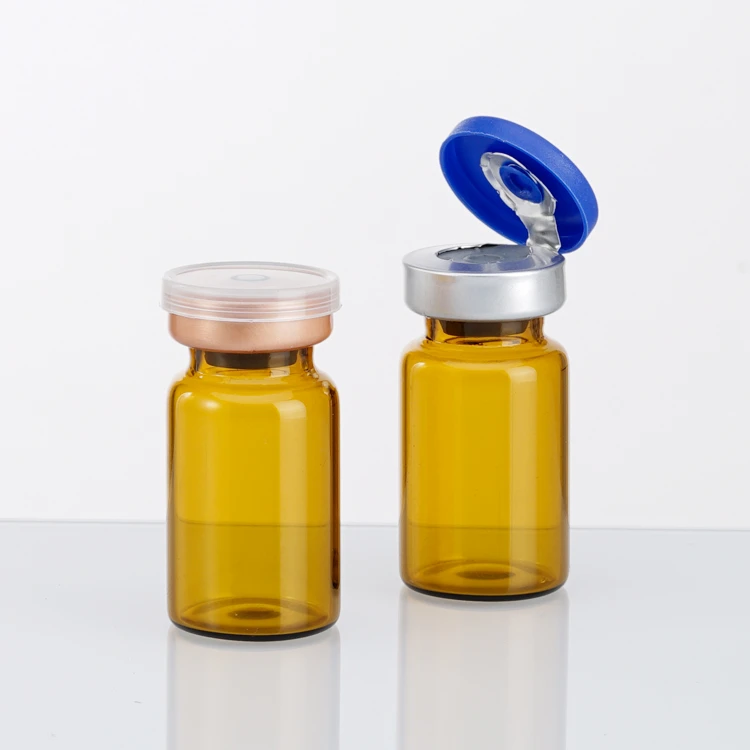

On the other hand, in industrial applications where you're dealing with high - pressure gases like in a chemical plant, 1 ml vials might not be the best choice. You'd need to use vials that are specifically designed to withstand high pressures.
If you're working with biological gases, such as those produced by cells in a lab, 1 ml vials can be a good option. The small volume is perfect for collecting samples from small - scale experiments. And the glass vials are less likely to contaminate the biological samples.
Freeze - dried Powder Bottle and Glass Medical Vials are also related products that might be of interest. While they're not specifically designed for gas storage, they share some similar features with 1 ml vials. For example, they're often made of high - quality glass and have good sealing mechanisms.
So, are 1 ml vials suitable for storing gas samples? The answer is, it depends. They can be a great option for small - scale, low - pressure gas sample collection and storage. But if you're dealing with large volumes or high - pressure gases, you might need to look for other solutions.
If you're interested in purchasing 1 ml vials for your gas sample storage needs, I'd love to talk to you. Whether you're in a research lab, an environmental monitoring agency, or an industrial facility, we can work together to find the right vials for your specific requirements. Just reach out, and we can start a discussion about your project.
References
- Principles of Gas Sampling by John Doe (20XX)
- Laboratory Vial Selection Guide by Jane Smith (20XX)