

Hey there! As a supplier of amber glass bottles, I often get asked about the weight of these bottles. It might seem like a simple question, but there's actually quite a bit to unpack.
First off, let's talk about why the weight of an amber glass bottle matters. For starters, weight can impact shipping costs. Heavier bottles mean more money spent on shipping, both for us as suppliers and for you as customers. Also, the weight can give you an idea about the durability and quality of the bottle. Generally, a heavier glass bottle is sturdier and less likely to break during handling and transportation.
Now, the weight of an amber glass bottle can vary widely depending on several factors. One of the main factors is the size of the bottle. Just like you'd expect, a larger bottle will weigh more than a smaller one. For example, a 10ml Glass Bottle is going to be a lot lighter than a 500ml or 1-liter amber glass bottle.
The thickness of the glass also plays a huge role. Thicker glass not only makes the bottle more robust but also adds to its weight. Some applications, like storing high - value or volatile substances, might require a thicker - walled amber glass bottle for better protection. On the other hand, if you're using the bottle for something less sensitive, a thinner - walled option could save you on weight and cost.
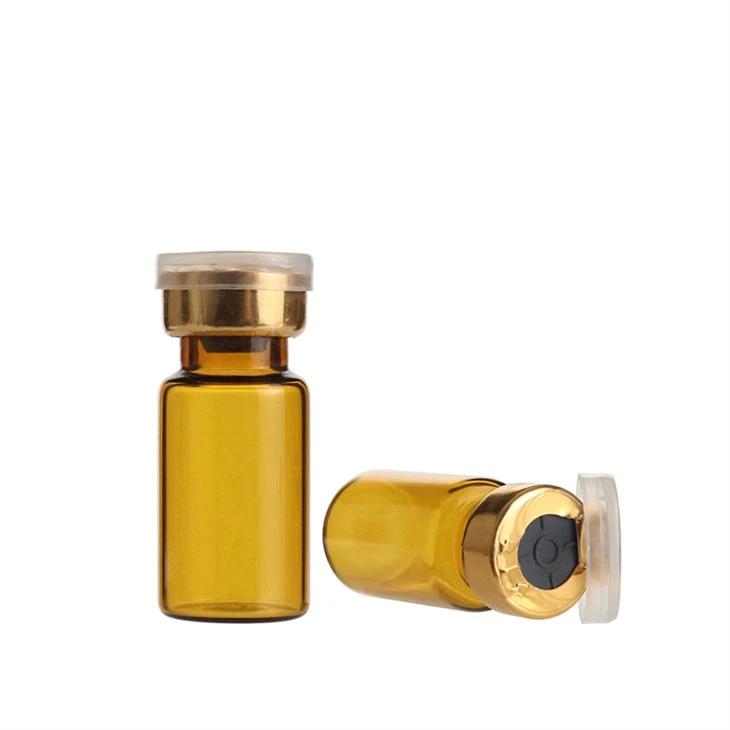
Let's take a closer look at some common types of amber glass bottles. The 10ml Glass Vial with Rubber Stopper is a popular choice, especially in the pharmaceutical and cosmetic industries. These small vials usually weigh around 10 - 15 grams, depending on the glass thickness and the type of rubber stopper used. The rubber stopper itself adds a little bit of weight, but it's mainly there to provide a tight seal and keep the contents fresh.
Another well - known type is the Amber Medicine Glass Bottle. These come in various sizes, from 30ml to 250ml or more. A 30ml amber medicine glass bottle typically weighs around 30 - 40 grams, while a 250ml one can weigh anywhere from 150 to 250 grams. The difference in weight is due to the increased volume and the need for a sturdier structure to hold a larger amount of liquid.
When it comes to the manufacturing process, the way the bottle is made can also affect its weight. Bottles made using the blow - molding process might have a slightly different weight distribution compared to those made through the press - and - blow method. Blow - molded bottles tend to have a more uniform wall thickness, which can result in a more consistent weight. Press - and - blow bottles, on the other hand, might have some variation in wall thickness, leading to a bit more weight fluctuation.
If you're in the market for amber glass bottles, it's important to consider your specific needs. If you're shipping a large quantity of bottles, a lighter option might be more cost - effective in terms of shipping. But if you're dealing with products that need extra protection, a heavier, thicker - walled bottle could be the way to go.
We understand that every customer's requirements are unique. That's why we offer a wide range of amber glass bottles in different sizes, thicknesses, and weights. Whether you need a small vial for essential oils or a large bottle for storing chemicals, we've got you covered.
If you're interested in learning more about the weight of our amber glass bottles or want to discuss your specific needs, feel free to reach out. We're here to help you find the perfect solution for your product packaging. Let's have a chat and see how we can work together to meet your goals.
References:

- Glass Packaging Institute. (n.d.). Understanding Glass Properties.
- Pharmaceutical Packaging Handbook. (2019). Various authors.