

Amber glass bottles are a staple in various industries, especially in pharmaceuticals, cosmetics, and food. Their unique color not only adds an aesthetic appeal but also serves a crucial function in protecting the contents from harmful UV light. One of the key factors that contribute to their functionality and durability is their thickness. In this blog post, I'll share insights as an amber glass bottle supplier on what determines the thickness of these bottles and why it matters.
Understanding the Basics of Amber Glass Bottles
Amber glass is made by adding iron, sulfur, and carbon to the glass - making mixture, which gives it that distinctive brown - amber color. This color acts as a natural filter, blocking out a significant portion of UV light. UV light can cause chemical reactions in many substances, such as breaking down active ingredients in medications or altering the flavor and quality of food products.
As a supplier, I've seen amber glass bottles used in a wide range of applications. For example, Medicine Bottle is a common type of amber glass container. It's designed to store various types of medications, from liquid syrups to pills. Another popular application is Freeze - dried Powder Bottle, which is used to preserve the integrity of freeze - dried substances.
Factors Affecting the Thickness of Amber Glass Bottles
1. Bottle Size
The size of the bottle plays a significant role in determining its thickness. Larger bottles generally need to be thicker to maintain their structural integrity. A small 10ml Glass Vial with Rubber Stopper can have a relatively thinner wall because it has less surface area and volume to support. In contrast, a large - capacity amber glass bottle used for storing bulk liquids will require a thicker wall to prevent breakage during handling and transportation.
2. Content Type
The nature of the contents also affects the bottle's thickness. If the bottle is intended to hold a highly volatile or corrosive substance, a thicker glass wall may be necessary. For example, some chemicals can react with the glass over time, and a thicker wall provides an extra layer of protection to prevent any leakage or contamination. Medications that are sensitive to air and moisture may also need a thicker bottle to ensure a better seal and longer shelf - life.
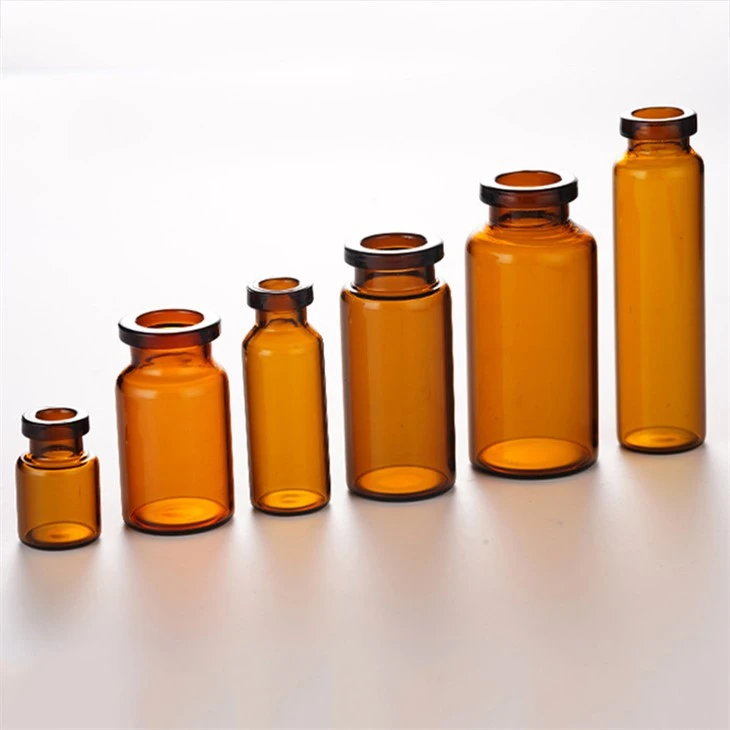

3. Manufacturing Process
The manufacturing process can influence the thickness of the bottle. Different methods, such as blow - molding or press - molding, can result in varying wall thicknesses. Blow - molding is a common method for producing amber glass bottles. During this process, a glass blob is placed in a mold and inflated with air. The pressure and speed of inflation can be adjusted to control the thickness of the bottle walls. Press - molding, on the other hand, involves pressing the glass into a mold. This method can sometimes produce bottles with more uniform thickness, especially for complex shapes.
4. Intended Use and Handling
The way the bottle will be used and handled also impacts its thickness. Bottles that are likely to be subjected to rough handling, such as those used in industrial settings or for outdoor products, need to be thicker. For example, if a bottle is going to be shipped long - distance or stored in a warehouse where it may be stacked or bumped, a thicker wall will reduce the risk of breakage.
Typical Thickness Ranges
The thickness of amber glass bottles can vary widely depending on the factors mentioned above. For small vials like the 10ml glass vial, the wall thickness can range from 0.8mm to 1.2mm. These thin - walled vials are suitable for storing small amounts of liquid or powder samples.
Medium - sized amber glass bottles, such as those with a capacity of 50ml - 200ml, usually have a wall thickness between 1.2mm and 2mm. These bottles are commonly used for cosmetics, essential oils, and some over - the - counter medications.
Large - capacity amber glass bottles, with volumes exceeding 500ml, can have wall thicknesses of 2mm or more. These bottles are often used for storing bulk liquids in the food and beverage industry or for large - scale pharmaceutical production.
Importance of Appropriate Thickness
1. Product Protection
The right thickness is crucial for protecting the product inside the bottle. A too - thin bottle may not provide adequate protection against UV light, air, and moisture, leading to a shorter shelf - life of the contents. For example, if a medicine is stored in a bottle with a thin wall, it may be more prone to degradation, reducing its effectiveness.
2. Safety
Safety is another important aspect. A thick - walled bottle is less likely to break during normal use, reducing the risk of injury from shattered glass and spillage of the contents. This is especially important for bottles containing hazardous substances.
3. Brand Image
The thickness of the bottle can also impact the brand image. A well - made, appropriately thick amber glass bottle gives a sense of quality and reliability. Customers are more likely to trust a product that is packaged in a sturdy bottle, which can enhance brand loyalty.
Quality Control in Thickness
As a supplier, ensuring the correct thickness of amber glass bottles is a top priority. We use advanced measurement tools, such as calipers and ultrasonic thickness gauges, to check the wall thickness at multiple points on each bottle. This helps us maintain consistency in our products and meet the specific requirements of our customers.
We also conduct regular quality audits throughout the manufacturing process. From the raw material stage to the final inspection, every step is carefully monitored to ensure that the bottles meet the industry standards for thickness and other quality parameters.
Conclusion
The thickness of amber glass bottles is a complex characteristic influenced by multiple factors, including bottle size, content type, manufacturing process, and intended use. Appropriate thickness is essential for product protection, safety, and brand image.
If you're in the market for high - quality amber glass bottles for your business, whether it's for medicine, cosmetics, or food products, we're here to help. We offer a wide range of amber glass bottles with different sizes and thicknesses to meet your specific needs. Contact us today to start a procurement discussion and find the perfect packaging solution for your products.
References
- "Glass Packaging Handbook" by Glass Packaging Institute
- "Pharmaceutical Packaging Technology" by Kenneth G. Pitt