

What is the Thermal Expansion Coefficient of a Gray Rubber Stopper?
As a dedicated supplier of gray rubber stoppers, I often encounter inquiries from customers about the technical aspects of our products. One question that frequently comes up is regarding the thermal expansion coefficient of gray rubber stoppers. In this blog post, I will delve into this topic to provide you with a comprehensive understanding.
Understanding Thermal Expansion
Before we discuss the thermal expansion coefficient of gray rubber stoppers, it's essential to understand what thermal expansion is. Thermal expansion is the tendency of matter to change in volume in response to a change in temperature. When a material is heated, its molecules gain energy and start to move more vigorously, causing the material to expand. Conversely, when it is cooled, the molecules slow down, and the material contracts.
The thermal expansion coefficient is a measure of how much a material expands or contracts per unit length or volume for a given change in temperature. It is usually expressed in units of per degree Celsius (°C⁻¹) or per kelvin (K⁻¹). Different materials have different thermal expansion coefficients, which depend on their chemical composition, molecular structure, and other factors.
Factors Affecting the Thermal Expansion Coefficient of Gray Rubber Stoppers
Gray rubber stoppers are typically made from natural rubber or synthetic rubber compounds. The thermal expansion coefficient of these rubber materials can be influenced by several factors:
- Rubber Composition: The type of rubber used in the stopper, as well as the additives and fillers incorporated into the rubber compound, can significantly affect its thermal expansion properties. For example, natural rubber generally has a higher thermal expansion coefficient compared to some synthetic rubbers.
- Cross - linking Density: The degree of cross - linking in the rubber polymer network plays a crucial role. Higher cross - linking density restricts the movement of polymer chains, resulting in a lower thermal expansion coefficient.
- Temperature Range: The thermal expansion coefficient of rubber is not constant over all temperature ranges. It may vary depending on whether the rubber is in a glassy state, a rubbery state, or a viscous state. In general, the thermal expansion coefficient increases as the temperature rises.
Measuring the Thermal Expansion Coefficient of Gray Rubber Stoppers
There are several methods to measure the thermal expansion coefficient of rubber materials. One common method is the dilatometry method. In this method, a sample of the gray rubber stopper is placed in a dilatometer, which is a device that can accurately measure the change in length or volume of the sample as the temperature is changed.
The sample is heated or cooled at a controlled rate, and the corresponding change in dimensions is recorded. The thermal expansion coefficient can then be calculated using the following formula:
[ \alpha=\frac{\Delta L}{L_0\Delta T} ]
where (\alpha) is the linear thermal expansion coefficient, (\Delta L) is the change in length, (L_0) is the original length, and (\Delta T) is the change in temperature.
For volume expansion, the volumetric thermal expansion coefficient (\beta) is related to the linear thermal expansion coefficient by the equation (\beta = 3\alpha) for isotropic materials.

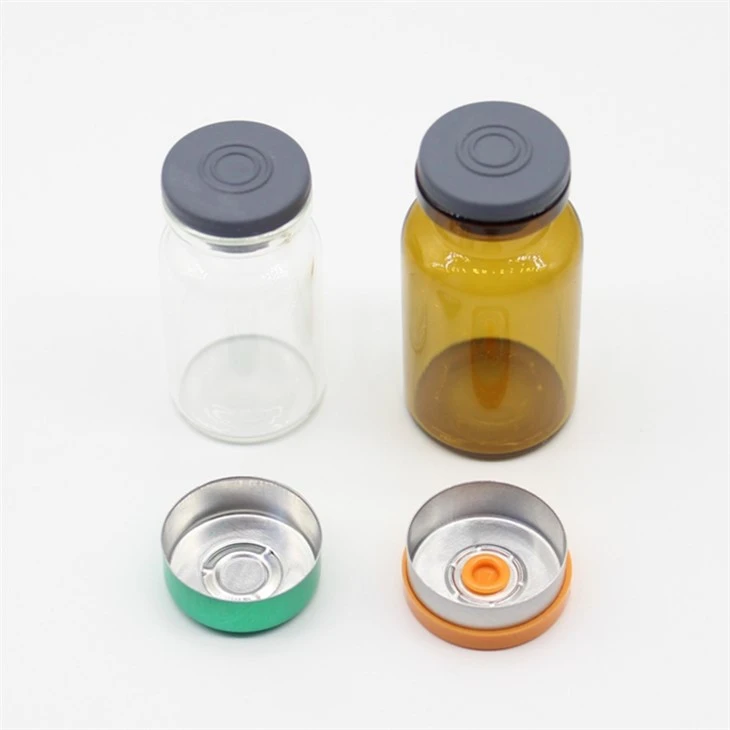
Typical Values of the Thermal Expansion Coefficient for Gray Rubber Stoppers
The thermal expansion coefficient of gray rubber stoppers can vary depending on the specific rubber formulation and manufacturing process. However, typical values for rubber materials range from approximately (100\times10^{-6}) to (300\times10^{-6}) °C⁻¹ for linear thermal expansion.
This relatively high thermal expansion coefficient compared to some other materials, such as metals, means that gray rubber stoppers can experience significant dimensional changes with temperature variations. This property needs to be considered in applications where precise dimensions are critical, such as in laboratory equipment or medical devices.
Importance of the Thermal Expansion Coefficient in Applications
The thermal expansion coefficient of gray rubber stoppers is an important parameter in various applications:
- Laboratory Applications: In laboratories, rubber stoppers are often used to seal test tubes, flasks, and other containers. Temperature changes during experiments can cause the rubber stopper to expand or contract, which may affect the seal integrity. Understanding the thermal expansion coefficient helps in selecting the appropriate rubber stopper for the specific temperature conditions of the experiment.
- Medical Applications: In the medical field, Medical Rubber Stopper are used in vials and syringes. Temperature variations during storage and transportation can impact the fit and performance of the stopper. For example, a 20mm Rubber Stopper for Injection needs to maintain a proper seal to prevent contamination and ensure the stability of the medication inside the vial.
- Industrial Applications: In industrial settings, rubber stoppers are used in pipes, valves, and other equipment. Temperature changes can cause the rubber stopper to expand or contract, which may lead to leakage or mechanical failure. Knowledge of the thermal expansion coefficient is crucial for designing reliable and efficient industrial systems.
Our Expertise as a Gray Rubber Stopper Supplier
As a leading supplier of gray rubber stoppers, we have extensive experience in understanding and controlling the thermal expansion properties of our products. Our research and development team conducts regular tests to ensure that our rubber stoppers meet the required thermal expansion specifications for different applications.
We use high - quality rubber materials and advanced manufacturing processes to produce gray rubber stoppers with consistent thermal expansion coefficients. Our Rubber Stoppers Plug are designed to perform well under a wide range of temperature conditions, providing reliable sealing solutions for our customers.
Contact Us for Your Gray Rubber Stopper Needs
If you are in need of gray rubber stoppers for your specific application and want to know more about their thermal expansion properties, we are here to help. Our technical experts can provide you with detailed information and guidance on selecting the right rubber stopper for your requirements.
Whether you are in the laboratory, medical, or industrial field, we can offer customized solutions to meet your needs. Contact us today to start a discussion about your gray rubber stopper procurement and explore how our products can benefit your operations.
References
- Sperling, L. H. (2006). Introduction to Physical Polymer Science. Wiley - Interscience.
- Mark, J. E. (Ed.). (2007). Physical Properties of Polymers Handbook. Springer.