

Hey there! As a supplier of rubber vial stoppers, I often get asked about the surface finish of these little but crucial components. So, let's dive right in and explore what the surface finish of rubber vial stoppers is all about.
First off, what exactly do we mean by "surface finish"? In simple terms, it refers to the texture, appearance, and quality of the outer layer of the rubber stopper. The surface finish can have a big impact on how the stopper performs and how well it suits its intended use.
One of the key factors in the surface finish is smoothness. A smooth surface finish is usually preferred in many applications. For example, in the pharmaceutical industry, smooth - surfaced rubber vial stoppers are essential. When a syringe needle is inserted through the stopper to draw out the medication, a smooth surface reduces the risk of rubber particles being dislodged. These particles could contaminate the drug, which is a huge no - no in the pharma world.
But achieving a smooth surface isn't always a walk in the park. It involves a combination of the right rubber compound, the manufacturing process, and quality control. We use high - grade rubber materials that are carefully selected to ensure they can be molded into stoppers with a consistently smooth finish. The molding process itself is also crucial. We've got advanced molding equipment that can precisely control the pressure, temperature, and time during the molding operation. This helps in creating stoppers with a uniform and smooth surface.
On the other hand, there are some cases where a slightly textured surface finish might be beneficial. In certain laboratory settings, a textured surface can provide better grip when handling the vials. It makes it easier for researchers to pick up and manipulate the vials without the stopper slipping out. This can be especially important when dealing with small or delicate vials.
Now, let's talk about the appearance of the surface finish. The color of the rubber stopper can also be part of the surface finish equation. We offer a variety of colors, such as the Gray Rubber Stopper. The color might not seem like a big deal at first glance, but it can actually serve practical purposes. For example, different colors can be used to distinguish between different types of drugs or samples in a laboratory or pharmaceutical production facility. It's a simple yet effective way to improve organization and reduce the risk of mix - ups.
Another aspect of the surface finish is the cleanliness of the surface. We make sure that our rubber vial stoppers are free from any contaminants on the surface. This is done through a series of cleaning and sterilization processes. After the molding process, the stoppers go through thorough cleaning to remove any residual chemicals, dust, or debris. Then, they are sterilized to meet the strict hygiene standards required by the industries we serve.
The durability of the surface finish is also something we take seriously. The rubber vial stoppers need to maintain their surface quality over time, even when exposed to different environmental conditions. They should resist wear, tear, and degradation. For example, if a stopper is going to be used in a high - humidity environment, it needs to be able to withstand the moisture without its surface finish deteriorating. We test our stoppers under various conditions to ensure they can hold up well.

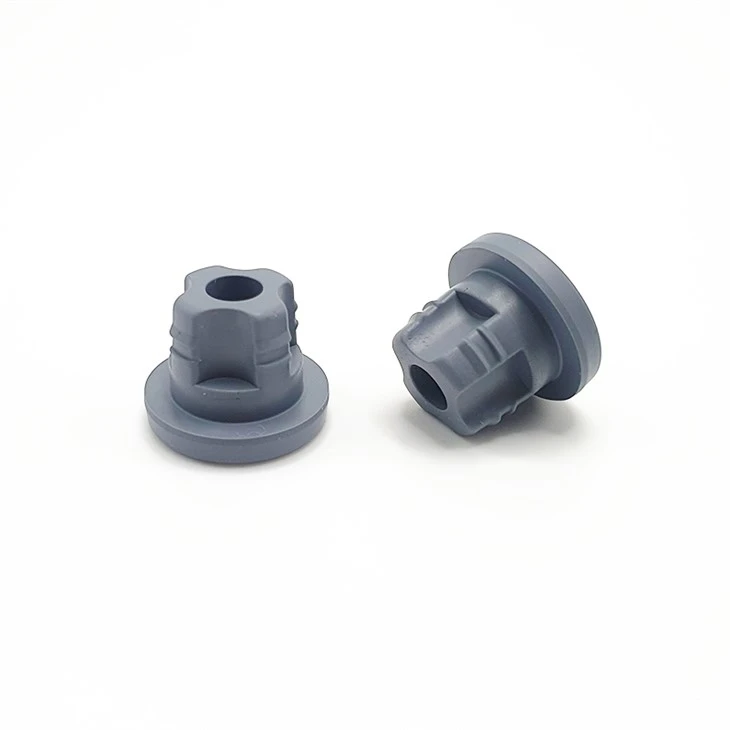
Let's take a closer look at some of the different types of rubber stoppers we offer and how their surface finishes are optimized for specific uses. The 20mm Bromobutyl Rubber Stopper is a popular choice in the pharmaceutical industry. Bromobutyl rubber has excellent chemical resistance, and we've fine - tuned the surface finish of these stoppers to ensure they provide a tight seal and prevent any leakage of the medication inside the vial. The smooth surface also makes it easy for needles to penetrate without leaving any rubber fragments behind.
Then there's the Chlorobutyl Rubber Stopper. Chlorobutyl rubber is known for its good gas barrier properties. The surface finish of these stoppers is designed to enhance the sealing performance and protect the contents of the vial from oxygen and moisture. A smooth and clean surface helps in creating an airtight seal, which is crucial for preserving the stability and efficacy of the drugs or samples stored in the vials.
In addition to the surface finish characteristics we've discussed, we also pay attention to the dimensional accuracy of the stoppers. A well - finished surface is no good if the stopper doesn't fit properly into the vial. We use precision measurement tools to ensure that the stoppers have the right diameter, height, and other dimensions. This ensures a snug fit and a reliable seal every time.
We're constantly working on improving the surface finish of our rubber vial stoppers. We keep an eye on the latest industry trends and technological advancements. For example, we're exploring new rubber compounds and manufacturing techniques that could further enhance the smoothness, durability, and cleanliness of the surface finish.
If you're in the market for high - quality rubber vial stoppers, we'd love to hear from you. Whether you're in the pharmaceutical industry, a research laboratory, or any other field that requires reliable vial stoppers, we've got the expertise and the products to meet your needs. Our team is always ready to answer your questions, provide samples, and discuss your specific requirements. So, don't hesitate to reach out and start a conversation about how our rubber vial stoppers can be a great fit for your operations.
References
- "Rubber Technology Handbook"
- "Pharmaceutical Packaging Technology"
- Industry reports on rubber product manufacturing