

The modulus of elasticity, also known as Young's modulus, is a fundamental property in materials science that describes the stiffness of a material. It is defined as the ratio of stress (force per unit area) to strain (deformation per unit length) within the elastic limit of a material. In simpler terms, it tells us how much a material will stretch or compress when a force is applied to it.
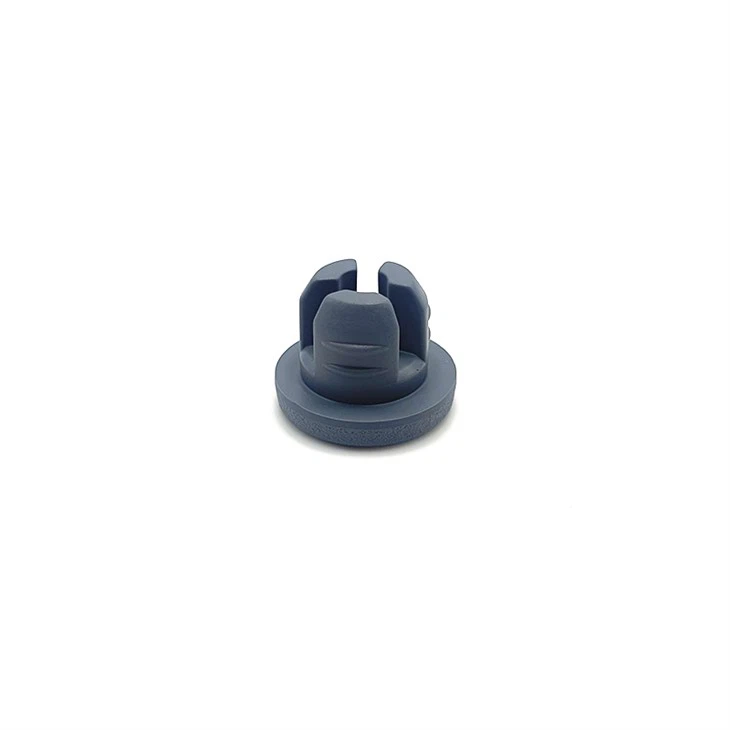
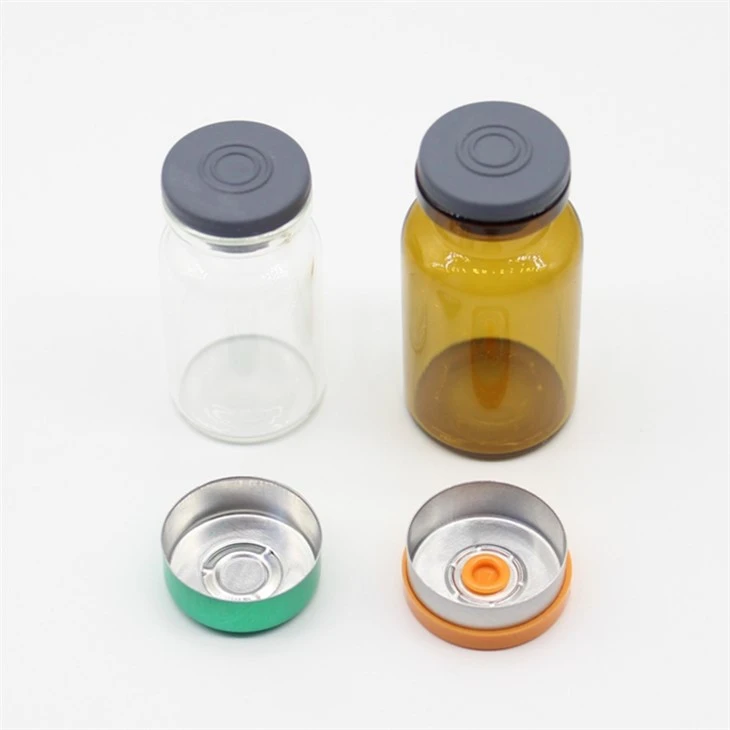
As a supplier of Gray Rubber Stopper, understanding the modulus of elasticity of gray rubber stoppers is crucial. Gray rubber stoppers are widely used in various industries, including pharmaceuticals, laboratories, and chemical processing. Their performance often depends on their ability to withstand different forces and maintain their shape and function.
Factors Affecting the Modulus of Elasticity of Gray Rubber Stoppers
1. Rubber Composition
The type of rubber used in the manufacturing of gray rubber stoppers significantly affects their modulus of elasticity. Natural rubber, for example, has different elastic properties compared to synthetic rubbers. Synthetic rubbers like chlorobutyl rubber are often used in the production of high - performance rubber stoppers. Chlorobutyl Rubber Stopper offers excellent chemical resistance and a relatively stable modulus of elasticity under different environmental conditions.
2. Cross - linking
Cross - linking is a process where polymer chains in the rubber are chemically bonded together. The degree of cross - linking directly impacts the modulus of elasticity. Higher cross - linking density generally leads to a higher modulus of elasticity, making the rubber stopper stiffer and less deformable. In the production of gray rubber stoppers, the cross - linking process is carefully controlled to achieve the desired balance between stiffness and flexibility.
3. Temperature
Temperature has a significant influence on the modulus of elasticity of rubber materials. As the temperature increases, the rubber molecules become more mobile, and the rubber becomes softer. This results in a decrease in the modulus of elasticity. Conversely, at lower temperatures, the rubber becomes stiffer, and the modulus of elasticity increases. For gray rubber stoppers used in applications where temperature variations are common, such as in cold storage or high - temperature chemical processes, the temperature - dependent modulus of elasticity needs to be considered.
4. Filler Materials
Filler materials are often added to rubber to improve its mechanical properties, reduce costs, or enhance other characteristics. Common fillers include carbon black, silica, and clay. The type and amount of filler can affect the modulus of elasticity. For example, adding a large amount of carbon black can increase the stiffness of the rubber, thereby increasing the modulus of elasticity.
Measuring the Modulus of Elasticity of Gray Rubber Stoppers
The modulus of elasticity of gray rubber stoppers can be measured using various experimental methods. One of the most common methods is the tensile test. In a tensile test, a rubber stopper specimen is clamped at both ends and gradually pulled until it reaches its elastic limit. The force applied and the resulting deformation are measured, and the modulus of elasticity is calculated using the formula:
[E=\frac{\sigma}{\epsilon}]
where (E) is the modulus of elasticity, (\sigma) is the stress (force per unit area), and (\epsilon) is the strain (deformation per unit length).
Another method is the compression test. In a compression test, a rubber stopper is placed between two parallel plates, and a compressive force is applied. The deformation of the rubber stopper under compression is measured, and the modulus of elasticity can be determined from the stress - strain relationship.
Importance of the Modulus of Elasticity in Applications
1. Pharmaceutical Industry
In the pharmaceutical industry, 20mm Rubber Stopper for Injection is commonly used to seal vials containing drugs. The appropriate modulus of elasticity is essential to ensure a proper seal. If the rubber stopper is too soft (low modulus of elasticity), it may not provide a tight seal, leading to contamination or leakage of the drug. On the other hand, if it is too stiff (high modulus of elasticity), it may be difficult to insert the needle for injection, or it may cause damage to the vial.
2. Laboratory Applications
In laboratories, gray rubber stoppers are used to seal test tubes, flasks, and other containers. The modulus of elasticity affects the ease of insertion and removal of the stopper, as well as its ability to maintain a seal under different pressures. A rubber stopper with the right modulus of elasticity will prevent the escape of gases or liquids while still being easy to handle.
3. Chemical Processing
In chemical processing plants, gray rubber stoppers are used in equipment where they may be exposed to various chemicals and high pressures. The modulus of elasticity needs to be carefully selected to ensure that the rubber stopper can withstand the chemical environment and the mechanical stresses without deforming or failing.
Our Role as a Gray Rubber Stopper Supplier
As a supplier of gray rubber stoppers, we understand the importance of the modulus of elasticity in different applications. We have a team of experienced engineers and technicians who are dedicated to ensuring that our products meet the highest quality standards.
We carefully select the rubber materials and control the manufacturing processes to achieve the desired modulus of elasticity for our gray rubber stoppers. Our quality control department conducts rigorous testing on each batch of products to ensure that they meet the specified modulus of elasticity requirements.
Whether you need a soft rubber stopper for a delicate laboratory application or a stiff rubber stopper for a high - pressure chemical process, we can provide you with the right solution. We also offer customized products to meet your specific needs.
If you are interested in our gray rubber stoppers or have any questions about the modulus of elasticity and its impact on your applications, we encourage you to contact us for a detailed discussion. Our sales team is ready to assist you in finding the most suitable rubber stoppers for your requirements.
References
- Callister, W. D., & Rethwisch, D. G. (2011). Materials Science and Engineering: An Introduction. Wiley.
- Sperling, L. H. (2006). Introduction to Physical Polymer Science. Wiley - Interscience.
- Mark, J. E. (Ed.). (2007). Physical Properties of Polymers Handbook. Springer.