

As a supplier of 32mm rubber stoppers, ensuring the quality of our products is of utmost importance. Rubber stoppers play a crucial role in various industries, especially in pharmaceuticals and laboratories, where they are used to seal vials and containers to maintain the integrity of the contents. In this blog post, I will share some key methods and considerations on how to check the quality of a 32mm rubber stopper.
Physical Inspection
Appearance
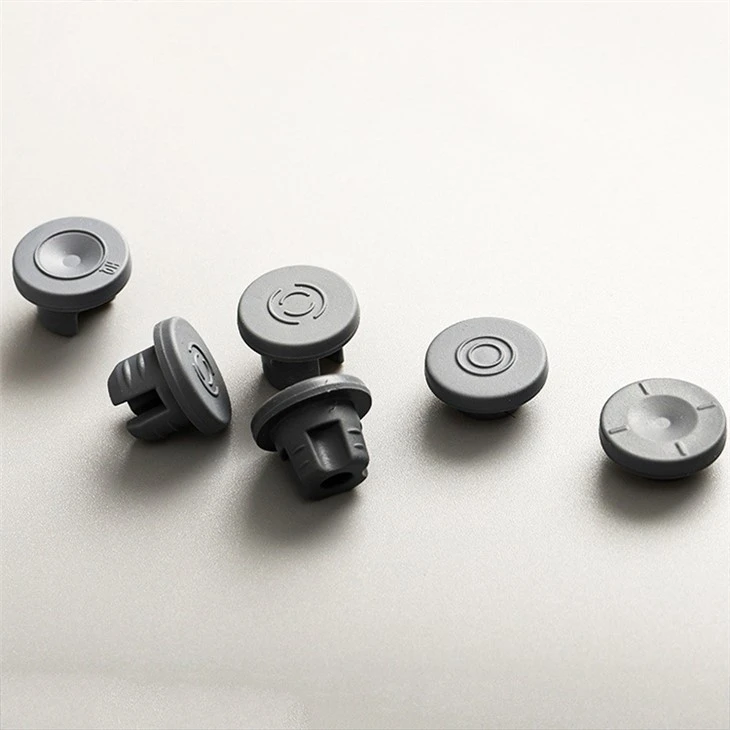
The first step in checking the quality of a 32mm rubber stopper is a visual inspection. A high - quality rubber stopper should have a smooth and uniform surface. Any visible cracks, bubbles, or irregularities on the surface can indicate manufacturing defects. For example, cracks can compromise the sealing ability of the stopper, allowing air or contaminants to enter the container. Bubbles may be a sign of improper mixing of the rubber compound during the manufacturing process, which can affect the mechanical properties of the stopper.
Size and Dimensions
Accurate size and dimensions are critical for a 32mm rubber stopper. The diameter should be precisely 32mm, with a tolerance that meets the industry standards. A stopper that is too large may not fit properly into the container, while a stopper that is too small may not provide an adequate seal. You can use calipers or micrometers to measure the diameter, height, and other relevant dimensions of the stopper. Make sure to measure multiple points on the stopper to ensure uniformity.
Hardness
The hardness of a rubber stopper is an important characteristic that affects its performance. It is typically measured using a durometer. Different applications may require rubber stoppers with different hardness levels. For example, in pharmaceutical applications, a stopper with the appropriate hardness is needed to ensure a proper seal without being too hard to insert or remove. You can refer to the product specifications to determine the required hardness range for the 32mm rubber stopper and use a durometer to verify it.
Chemical Analysis
Extractables and Leachables
In applications such as pharmaceuticals, it is essential to check for extractables and leachables in the rubber stopper. Extractables are substances that can be extracted from the rubber under specific conditions, while leachables are substances that migrate from the rubber into the product over time. These substances can potentially contaminate the contents of the container and affect its safety and efficacy.
To test for extractables and leachables, you can use techniques such as high - performance liquid chromatography (HPLC) or gas chromatography - mass spectrometry (GC - MS). These methods can identify and quantify the various chemical compounds present in the extracts from the rubber stopper. You can also refer to relevant industry standards and guidelines, such as those provided by the United States Pharmacopeia (USP), to determine the acceptable levels of extractables and leachables.
Compatibility with Contents
The rubber stopper should be chemically compatible with the contents of the container. For example, if the container holds a corrosive chemical, the rubber stopper should be resistant to corrosion. You can conduct compatibility tests by exposing the rubber stopper to the contents of the container under controlled conditions for a certain period of time. Observe any changes in the appearance, hardness, or other properties of the stopper. If there are signs of degradation, such as swelling, cracking, or discoloration, the stopper may not be suitable for the application.
Sealing Performance
Leak Testing
One of the most important functions of a 32mm rubber stopper is to provide a reliable seal. Leak testing is a crucial step in evaluating the quality of the stopper. There are several methods for leak testing, including the bubble test and the pressure decay test.
In the bubble test, the stoppered container is submerged in a liquid, and any bubbles that form indicate a leak. This method is simple and cost - effective but may not be sensitive enough to detect small leaks. The pressure decay test, on the other hand, involves pressurizing the container and monitoring the pressure over time. A significant drop in pressure indicates a leak. This method is more sensitive and can detect smaller leaks.
Closure Integrity
Closure integrity refers to the ability of the stopper to maintain a seal over time. Factors such as temperature, humidity, and vibration can affect the closure integrity of the stopper. You can conduct accelerated aging tests by subjecting the stoppered containers to elevated temperatures and humidity levels for a certain period of time. Then, perform leak testing on the aged samples to evaluate the long - term sealing performance of the stopper.

Microbiological Testing
Bioburden
In pharmaceutical and other applications where sterility is crucial, it is necessary to test the bioburden of the rubber stopper. Bioburden refers to the number of viable microorganisms present on the surface of the stopper. You can use methods such as membrane filtration or direct plating to collect and enumerate the microorganisms. The acceptable bioburden levels are usually specified in relevant industry standards.
Sterility
For applications that require sterile rubber stoppers, sterility testing is essential. This can be done using methods such as the membrane filtration method or the direct inoculation method. In the membrane filtration method, the stopper is rinsed with a suitable fluid, and the rinse fluid is filtered through a membrane. The membrane is then incubated to detect the presence of any microorganisms. In the direct inoculation method, the stopper is directly placed in a culture medium and incubated.
Conclusion
Checking the quality of a 32mm rubber stopper involves a comprehensive evaluation of its physical, chemical, sealing, and microbiological properties. By following the methods and considerations outlined in this blog post, you can ensure that the rubber stoppers you purchase or supply meet the required quality standards.
If you are in need of high - quality 32mm rubber stoppers, we are here to provide you with the best products. Our rubber stoppers, including Injection Rubber Stopper, Pharmacutical Rubber Stopper, and Rubber Vial Stopper, are manufactured with strict quality control measures. We welcome you to contact us for procurement discussions and look forward to establishing a long - term business relationship with you.
References
- United States Pharmacopeia (USP) General Chapters.
- ASTM International standards related to rubber products.
- Industry guidelines on pharmaceutical packaging materials.