

Hey there! I'm a supplier of rubber vial stoppers, and today I wanna chat about how these little guys can withstand mechanical stress. It's a topic that's super important, especially when you're dealing with stuff that needs to be stored safely and securely in vials.
First off, let's talk about what mechanical stress actually is. In simple terms, it's the force that's applied to an object, which can cause it to deform or break. For rubber vial stoppers, this can come from a bunch of different sources. When you're inserting the stopper into the vial, there's pressure. Then, during transportation or storage, there could be vibrations and impacts that put stress on the stopper. And if the vial is opened and closed multiple times, that's also a form of mechanical stress.

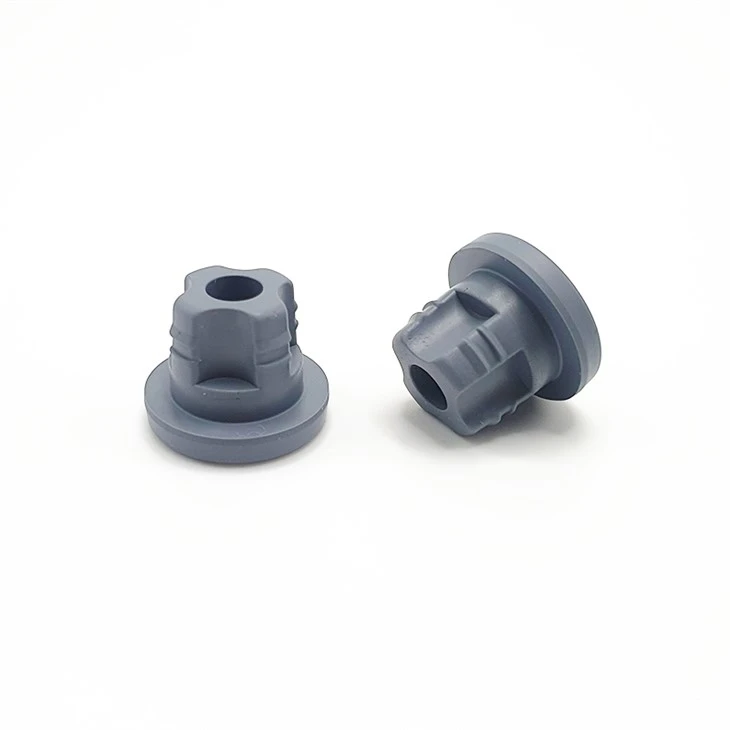
So, how do our rubber vial stoppers handle all this? Well, it all starts with the material. We use high - quality rubber compounds, like bromobutyl rubber. Bromobutyl rubber is known for its excellent resilience and durability. It can stretch and then bounce back to its original shape without getting permanently deformed. This is crucial because when you insert a 20mm Bromobutyl Rubber Stopper into a vial, it has to expand to fit snugly but then maintain its integrity.
The manufacturing process also plays a huge role. We use advanced molding techniques to ensure that the stoppers have a uniform structure. A well - molded stopper has consistent density throughout, which means that it can distribute mechanical stress evenly. If there were weak spots in the stopper, those areas would be more likely to fail under stress. For example, our Vial Rubber Stopper 13 mm is precision - molded to meet the highest standards of quality.
Another factor is the design of the stopper. We've spent a lot of time researching and testing different designs to find the ones that are most resistant to mechanical stress. Some stoppers have a ribbed design on the outside. These ribs help to grip the inside of the vial better, reducing the chances of the stopper being pushed out or dislodged during handling. They also add a bit of extra strength to the stopper. Our Rubber Stopper 20mm comes in various designs, each carefully crafted to provide optimal performance.
Let's dig a bit deeper into the science behind it. When a mechanical force is applied to a rubber stopper, the rubber molecules start to move and rearrange themselves. In a high - quality rubber like bromobutyl, the molecules are long and flexible. They can slide past each other when the stopper is stretched or compressed, but they also have strong intermolecular forces that hold them together. This allows the stopper to absorb the energy from the mechanical stress and then return to its normal state.
Temperature also affects how a rubber stopper withstands mechanical stress. Rubber becomes more brittle in cold temperatures and more flexible in warm temperatures. We take this into account when formulating our rubber compounds. Our stoppers are designed to perform well over a wide range of temperatures. Whether it's a cold storage facility or a warm laboratory environment, our stoppers will maintain their mechanical properties.
We also conduct a lot of testing on our rubber vial stoppers. We subject them to different levels of mechanical stress in the lab, simulating real - world conditions. We measure things like the stopper's compression set, which is how much it stays deformed after being compressed. A low compression set means that the stopper can bounce back better, which is a sign of good resistance to mechanical stress. We also test for tear strength, which is how well the stopper can resist being torn apart.
In addition to the physical properties of the rubber, the surface finish of the stopper is important. A smooth surface finish reduces friction when the stopper is inserted into the vial. This makes it easier to insert the stopper without applying excessive force, which could potentially damage the stopper. At the same time, a surface that's not too slippery ensures that the stopper stays in place once it's inserted.
Now, you might be wondering why all this matters. Well, if a rubber vial stopper can't withstand mechanical stress, it can lead to all sorts of problems. The stopper might not seal the vial properly, which could allow air, moisture, or contaminants to get in. This can spoil the contents of the vial, whether it's a pharmaceutical product, a chemical sample, or a biological specimen. In some cases, a failed stopper could even cause the vial to break, which is not only a waste of the product but can also be a safety hazard.
As a supplier, we're really proud of the quality of our rubber vial stoppers. We know that our customers rely on us to provide products that are reliable and can withstand the rigors of everyday use. Whether you're in the pharmaceutical industry, the chemical industry, or any other field that uses vials, we've got the right stopper for you.
If you're interested in learning more about our rubber vial stoppers or if you're looking to place an order, we'd love to hear from you. We can offer you competitive prices, high - quality products, and excellent customer service. Just reach out to us, and we'll be happy to have a chat about your specific needs. We can help you choose the right stopper for your application and answer any questions you might have. So, don't hesitate to get in touch and start a conversation about your rubber vial stopper requirements.
References
- "Handbook of Elastomers" by B. K. Gupta
- "Rubber Technology: Compounding, Testing, and Processing" by Werner Hofmann