

Do rubber stoppers come in different hardness levels? This is a question that often arises among those in industries where rubber stoppers are a crucial component. As a leading rubber stopper supplier, I'm here to shed light on this topic and provide you with comprehensive insights.
Understanding Rubber Stopper Hardness
Hardness is a fundamental property of rubber stoppers, and it significantly impacts their performance and suitability for various applications. In the rubber industry, hardness is typically measured using the Shore durometer scale. This scale ranges from 0 to 100, with lower values indicating softer rubber and higher values representing harder rubber.
Soft rubber stoppers, with a Shore hardness of around 30 - 40, are highly flexible and conformable. They are excellent at creating a tight seal, even on irregular surfaces. This makes them ideal for applications where a leak - proof seal is essential, such as in some laboratory settings or for sealing containers that hold liquids prone to evaporation. For example, in a research laboratory, a soft rubber stopper can be used to seal a vial containing a volatile chemical, preventing any leakage and ensuring the safety of the experiment.
On the other hand, hard rubber stoppers, with a Shore hardness of 60 - 80 or higher, are more rigid. They offer greater resistance to deformation and are better suited for applications where the stopper needs to withstand mechanical stress or high pressure. In industrial settings, hard rubber stoppers might be used in high - pressure valves or in machinery where they need to maintain their shape under extreme conditions.
Different Applications Require Different Hardness Levels
The choice of rubber stopper hardness depends largely on the specific application. Let's explore some common industries and the hardness requirements they have.
Pharmaceutical Industry
In the pharmaceutical industry, the quality and performance of rubber stoppers are of utmost importance. Pharmaceutical products are often sensitive to air, moisture, and contaminants. Soft rubber stoppers are commonly used for vials that contain injectable drugs. Their flexibility allows for a perfect seal, preventing any external substances from entering the vial and ensuring the sterility and stability of the drug. For more information on pharmaceutical rubber stoppers, you can visit Pharmaceutical Rubber Stopper.
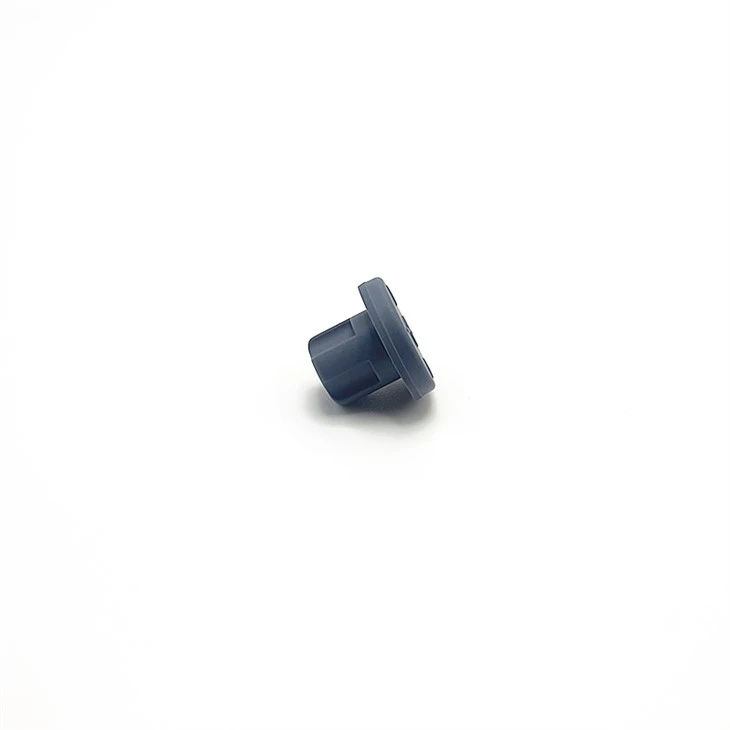
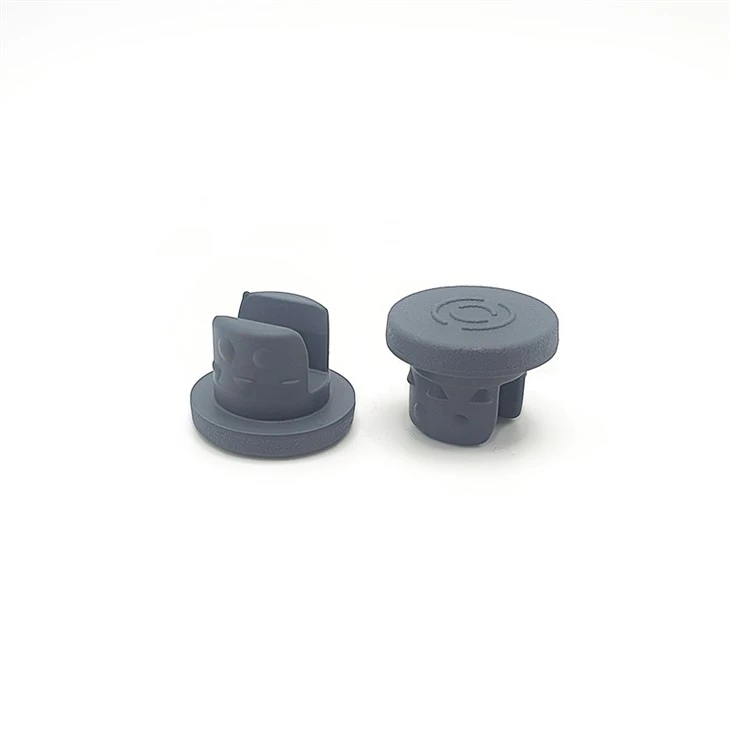
Hard rubber stoppers may be used in some pharmaceutical packaging applications where there is a need for a more robust seal, such as in large - volume containers or in situations where the stopper may be subject to handling forces during transportation.
Laboratory Use
Laboratories conduct a wide range of experiments, each with its own unique requirements. For general laboratory use, soft rubber stoppers are popular. They can be easily inserted into test tubes and flasks, creating an airtight seal. For example, when storing small amounts of chemicals in test tubes, a soft rubber stopper will prevent the chemicals from evaporating or reacting with the air.
However, in some specialized laboratory equipment, such as high - pressure reactors, hard rubber stoppers are necessary. These stoppers need to withstand the high pressures generated inside the reactor without deforming or leaking.
Food and Beverage Industry
In the food and beverage industry, rubber stoppers are used for sealing bottles and containers. Soft rubber stoppers are often preferred as they can provide a tight seal without damaging the container or the product inside. They are also more likely to be compliant with food - contact regulations. For products like wine or spirits, a soft rubber stopper can create an airtight seal that helps preserve the flavor and quality of the beverage.
Our Product Range
As a rubber stopper supplier, we offer a wide range of rubber stoppers with different hardness levels to meet the diverse needs of our customers.
We have Vial Rubber Stopper 13 mm available in various hardness options. These stoppers are commonly used in the pharmaceutical and laboratory industries. The soft versions are perfect for creating a gentle yet effective seal for small vials, while the hard versions can be used in more demanding applications.
Our 20mm Bromobutyl Rubber Stopper is another popular product. Bromobutyl rubber is known for its excellent chemical resistance and low permeability to gases. We offer this stopper in different hardness levels, allowing our customers to choose the one that best suits their specific requirements. Whether it's for pharmaceutical packaging or industrial applications, our 20mm bromobutyl rubber stopper can provide a reliable solution.
Factors Affecting Rubber Stopper Hardness
Several factors can affect the hardness of rubber stoppers during the manufacturing process. The type of rubber compound used is a primary factor. Different rubber polymers, such as natural rubber, synthetic rubber (e.g., butyl rubber, silicone rubber), have different inherent hardness characteristics.
The additives and fillers used in the rubber compound also play a role. For example, adding carbon black to a rubber compound can increase its hardness. The curing process is another critical factor. The temperature, time, and pressure during curing can all influence the final hardness of the rubber stopper.
Quality Control and Assurance
At our company, we understand the importance of providing high - quality rubber stoppers with consistent hardness levels. We have a strict quality control system in place. Our manufacturing process is carefully monitored to ensure that each rubber stopper meets the specified hardness requirements.
We use advanced testing equipment to measure the hardness of our rubber stoppers. Samples are taken at regular intervals during production, and the hardness is tested using a Shore durometer. Any products that do not meet our quality standards are rejected.
Conclusion
In conclusion, rubber stoppers do come in different hardness levels, and the choice of hardness depends on the specific application. Whether you need a soft rubber stopper for a delicate pharmaceutical vial or a hard rubber stopper for an industrial high - pressure application, we have the right solution for you.
If you are in the market for rubber stoppers and have specific requirements regarding hardness or other properties, we encourage you to contact us for a detailed discussion. Our team of experts is ready to assist you in selecting the most suitable rubber stoppers for your needs. We look forward to the opportunity to work with you and provide you with high - quality rubber stoppers that meet your exact specifications.
References
- ASTM D2240 - Standard Test Method for Rubber Property - Durometer Hardness.
- "Handbook of Elastomers" by A. K. Bhowmick and H. L. Stephens.
- Pharmaceutical Packaging Science and Technology literature on rubber stoppers.