

As a long - standing supplier of penicillin bottles, I've encountered numerous inquiries from customers about the expiration date of these essential medical containers. This topic is not only relevant to the pharmaceutical industry but also to anyone involved in the storage and distribution of medications. In this blog, I'll delve into the science behind penicillin bottles and whether they have a specific expiration date.
The Nature of Penicillin Bottles
Penicillin bottles, typically made of high - quality glass, are designed to store medications, especially those in liquid or powder form. They come in various sizes, such as the 20ml Amber Glass Bottle Medicine, Mini Bottles Glass, and Glass Vial. These bottles are chosen for their chemical stability, impermeability, and ability to protect the contents from external factors like light, air, and moisture.
Material Stability
The primary material of penicillin bottles is glass, which is an extremely stable substance. Glass is composed of silica and other additives, and its molecular structure is highly ordered. This stability means that glass does not degrade easily over time. Unlike some plastics that can break down due to oxidation or exposure to certain chemicals, glass remains chemically inert under normal storage conditions.
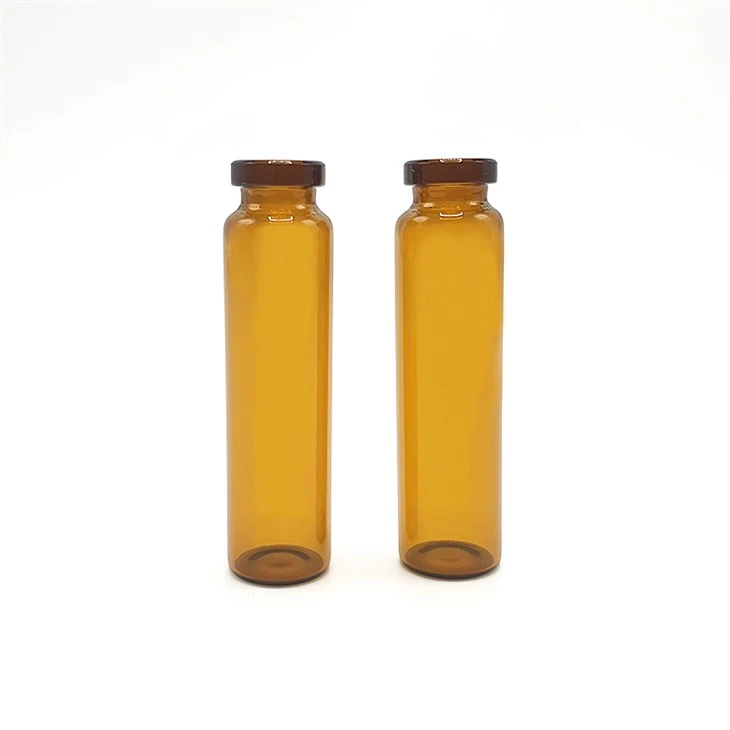

For example, if a penicillin bottle is stored in a cool, dry place away from direct sunlight, the glass itself will not change its physical or chemical properties significantly. There is no risk of the glass releasing harmful substances into the medication it contains, nor will it develop cracks or other structural defects simply due to the passage of time.
Sealing and Closure Systems
The integrity of a penicillin bottle also depends on its sealing and closure system. Most penicillin bottles are sealed with rubber stoppers and aluminum caps. The rubber stoppers are made of materials that are resistant to chemical attack and have good elasticity. However, rubber can age over time.
Exposure to oxygen, humidity, and certain chemicals can cause the rubber to harden, lose its elasticity, or develop small cracks. When this happens, the seal of the bottle may be compromised, allowing air and moisture to enter. This can lead to the degradation of the medication inside. Therefore, while the glass bottle itself may not have an expiration date, the rubber stopper and closure system do have a limited lifespan.
To ensure the long - term stability of the medication, pharmaceutical companies often conduct accelerated aging studies on the rubber stoppers. These studies simulate years of storage conditions in a relatively short period. Based on the results of these studies, they can determine the recommended shelf - life for the entire packaging system, which includes the penicillin bottle and its closure.
Environmental Factors
The storage environment plays a crucial role in determining the longevity of a penicillin bottle and its contents. High temperatures can accelerate chemical reactions, both in the glass and in the medication. For instance, if a penicillin bottle is stored in a hot warehouse where the temperature regularly exceeds 30°C, the rate of evaporation of the liquid medication may increase, and the rubber stopper may age more quickly.
Humidity is another factor. Excessive moisture can cause the label on the bottle to peel off, and it can also promote the growth of mold on the rubber stopper. In addition, if the medication is sensitive to moisture, its quality may deteriorate.
Light can also have an impact. Ultraviolet (UV) light can break down certain chemical compounds in the medication, especially those that are photosensitive. This is why many penicillin bottles are made of amber glass, which can block a significant portion of UV light.
Regulatory Requirements
Pharmaceutical regulations around the world have strict requirements for the packaging and labeling of medications. These regulations ensure that patients receive safe and effective medications. In many countries, pharmaceutical companies are required to conduct stability studies on their products, including the packaging.
These studies involve storing the medication in its penicillin bottle under different conditions (temperature, humidity, light) for a specified period. The medication is then tested at regular intervals to determine its quality, potency, and safety. Based on the results of these studies, the pharmaceutical company will assign an expiration date to the product, which includes the penicillin bottle and its contents.
Conclusion
In conclusion, penicillin bottles themselves, made of glass, do not have a specific expiration date in the traditional sense. Glass is a stable material that can maintain its integrity for a very long time. However, the overall packaging system, including the rubber stopper and closure, has a limited lifespan due to the potential aging of these components.
The expiration date assigned to a medication in a penicillin bottle is mainly determined by the stability of the medication itself and the integrity of the packaging system. To ensure the safety and effectiveness of the medication, it is essential to follow the storage instructions provided by the pharmaceutical company and to use the medication before its expiration date.
If you are in the pharmaceutical industry and are looking for high - quality penicillin bottles, we are here to serve you. Our penicillin bottles are made from the finest glass materials and are designed to meet the strictest regulatory requirements. We offer a wide range of sizes and styles, including the 20ml Amber Glass Bottle Medicine, Mini Bottles Glass, and Glass Vial. Contact us to discuss your specific needs and start a procurement negotiation.
References
- Pharmaceutical Packaging Handbook. Edited by Thomas E. Shea. Informa Healthcare, 2007.
- Handbook of Pharmaceutical Glass Packaging. By John C. Mauro. William Andrew Publishing, 2013.
- Stability Testing of Pharmaceuticals. By Peter York and Paul Williams. Pharmaceutical Press, 2004.