

As a supplier of Rubber Stopper 32mm, I often receive inquiries from customers about the surface characteristics of our products. One of the most frequently asked questions is, "Do 32mm rubber stoppers have a smooth surface?" In this blog post, I will delve into this question, providing a detailed analysis based on scientific knowledge and our practical experience in the rubber stopper manufacturing industry.
The Importance of Surface Smoothness in Rubber Stoppers
Before we discuss whether 32mm rubber stoppers have a smooth surface, it's essential to understand why surface smoothness matters. In various applications, such as in the pharmaceutical, chemical, and laboratory sectors, rubber stoppers are used to seal containers. A smooth surface can offer several advantages.
Firstly, a smooth surface ensures a better seal. When a rubber stopper is inserted into a container, a smooth surface can conform more closely to the inner wall of the container, preventing leakage of the contents. This is particularly crucial in the pharmaceutical industry, where the integrity of the seal can affect the quality and shelf - life of the drugs.
Secondly, a smooth surface reduces the risk of contamination. Rough surfaces can trap particles and microorganisms, which can then contaminate the contents of the container. In laboratory settings, where precise and clean experiments are conducted, a smooth - surfaced rubber stopper is highly desirable.
Factors Affecting the Surface Smoothness of 32mm Rubber Stoppers
The surface smoothness of 32mm rubber stoppers is influenced by several factors, including the manufacturing process, the type of rubber material used, and the post - processing treatments.
Manufacturing Process
The manufacturing process plays a significant role in determining the surface smoothness of rubber stoppers. There are mainly two common manufacturing methods: compression molding and injection molding.
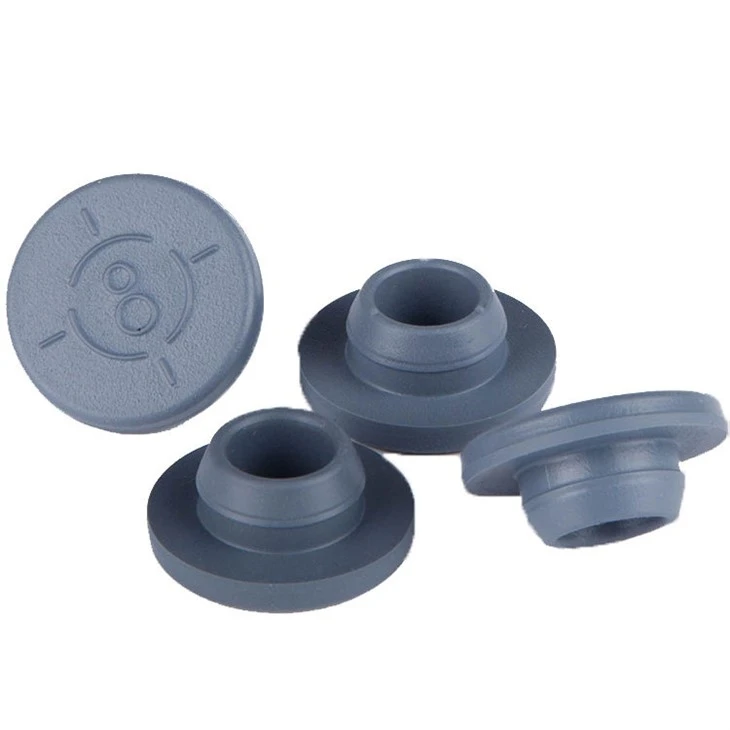
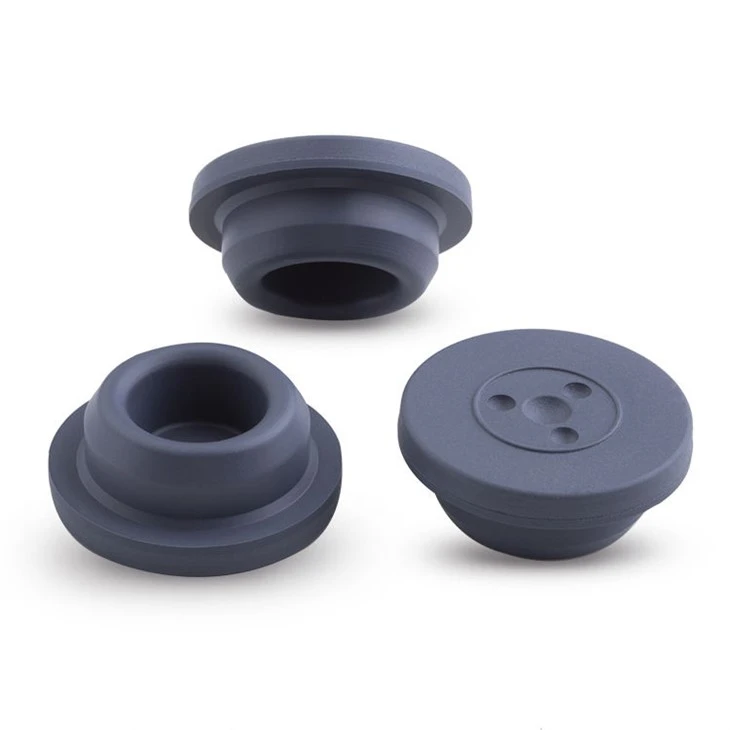
Compression molding involves placing a pre - measured amount of rubber compound into a mold cavity and then applying pressure and heat to shape the rubber into the desired form. This method can sometimes result in a slightly rougher surface due to the flow of the rubber compound during the molding process. However, with advanced mold design and precise process control, a relatively smooth surface can still be achieved.
Injection molding, on the other hand, injects the molten rubber compound into the mold cavity under high pressure. This method generally produces rubber stoppers with a smoother surface because the rubber is forced to fill the mold cavity evenly, resulting in a more consistent surface finish. At our company, we use state - of - the - art injection molding technology to ensure the high - quality surface of our Rubber Stopper 32mm.
Rubber Material
The type of rubber material used also affects the surface smoothness. Different rubber materials have different physical and chemical properties, which can influence their flow behavior during the molding process and the final surface characteristics.
For example, natural rubber has good elasticity but may have a slightly rougher surface compared to synthetic rubbers like butyl rubber. Butyl rubber is known for its excellent chemical resistance and low gas permeability. It also tends to produce a smoother surface due to its relatively uniform molecular structure. We carefully select high - quality butyl rubber for our 32mm rubber stoppers to ensure a smooth and reliable surface.
Post - processing Treatments
Post - processing treatments can further improve the surface smoothness of rubber stoppers. After molding, the rubber stoppers may undergo processes such as washing, polishing, and coating.
Washing can remove any residual mold release agents or surface contaminants, making the surface cleaner and smoother. Polishing can mechanically smooth the surface by removing small irregularities. Coating can also be applied to enhance the surface smoothness and provide additional properties such as improved chemical resistance.
Our 32mm Rubber Stoppers: A Smooth Surface Assurance
At our company, we are committed to providing 32mm rubber stoppers with a smooth surface. Through strict quality control measures at every stage of the manufacturing process, we ensure that our products meet the highest standards of surface smoothness.
We start with the selection of high - quality rubber materials. Our butyl rubber is sourced from reliable suppliers and undergoes rigorous testing to ensure its purity and quality. The injection molding process is carefully monitored, with precise control of temperature, pressure, and injection speed to ensure uniform filling of the mold cavity and a smooth surface finish.
After molding, our rubber stoppers go through a comprehensive post - processing treatment. They are thoroughly washed to remove any impurities, and then polished to further enhance the surface smoothness. We also offer optional coating services according to the specific requirements of our customers.
Applications of Smooth - Surfaced 32mm Rubber Stoppers
The smooth - surfaced 32mm rubber stoppers have a wide range of applications.
Pharmaceutical Industry
In the pharmaceutical industry, they are used to seal vials and infusion bottles. The smooth surface ensures a tight seal, preventing the leakage of drugs and protecting them from external contamination. Our 32mm Rubber Stopper for Infusion Bottle is specifically designed to meet the strict requirements of the pharmaceutical industry, with a smooth surface that complies with relevant quality standards.
Chemical Industry
In the chemical industry, these rubber stoppers are used to seal chemical containers. The smooth surface resists chemical corrosion and reduces the risk of chemical reactions with the contents of the container. They are also easy to clean, which is important for maintaining the purity of the chemicals.
Laboratory Settings
In laboratories, smooth - surfaced 32mm rubber stoppers are used in various experiments. They can be used to seal test tubes, flasks, and other laboratory glassware. The smooth surface ensures that the stoppers do not interfere with the experimental results and can be easily removed and re - inserted.
How to Evaluate the Surface Smoothness of 32mm Rubber Stoppers
If you are considering purchasing 32mm rubber stoppers, there are several ways to evaluate their surface smoothness.
Visual Inspection
A simple visual inspection can give you a general idea of the surface smoothness. Hold the rubber stopper under good lighting conditions and look for any visible irregularities, such as bumps, pits, or scratches. A smooth - surfaced rubber stopper should have a consistent and shiny appearance.
Tactile Sensation
You can also use your fingers to feel the surface of the rubber stopper. Run your fingers gently over the surface. A smooth surface should feel even and free of roughness. However, this method is relatively subjective and may not be very accurate for detecting small irregularities.
Surface Roughness Measurement
For a more accurate evaluation, surface roughness measurement equipment can be used. This equipment can measure the height variations on the surface of the rubber stopper and provide numerical values to quantify the surface roughness.
Conclusion
In conclusion, 32mm rubber stoppers can have a smooth surface, depending on the manufacturing process, rubber material, and post - processing treatments. As a professional Rubber Stopper 32mm supplier, we take every measure to ensure that our products have a smooth surface, meeting the diverse needs of our customers in different industries.
If you are interested in our 32mm rubber stoppers or have any questions about their surface smoothness or other properties, please feel free to contact us for further discussion and potential procurement. We are looking forward to working with you to provide the best rubber stopper solutions for your specific applications.
References
- ASTM D2240 - Standard Test Method for Rubber Property - Durometer Hardness
- ISO 4618 - Paints and varnishes - Terms and definitions
- Rubber Technology Handbook, Werner Hofmann