

Are glass medical vials compatible with all types of syringes? This is a question that often arises in the medical field, and as a supplier of high - quality glass medical vials, I am well - positioned to provide a comprehensive answer.
Compatibility Basics
The compatibility between glass medical vials and syringes is not a one - size - fits - all situation. It depends on several factors, including the design of the vial, the type of syringe, and the nature of the medication or substance stored in the vial.
Glass medical vials come in various shapes and sizes. Some are designed with a specific neck finish, such as a snap - off or a rubber - stoppered neck. Syringes, on the other hand, have different needle gauges, barrel sizes, and connection types. For instance, a syringe with a large - bore needle may be more suitable for withdrawing thick or viscous medications from a vial, while a small - gauge needle is often used for more delicate substances.
The first aspect to consider is the physical fit. The needle of the syringe must be able to penetrate the vial's closure without any issues. Most glass medical vials are sealed with rubber stoppers. The stopper's thickness and hardness can vary, and a syringe needle should be sharp enough to pierce through it smoothly. If the needle is too dull, it may cause the stopper to tear or break, leading to contamination of the medication inside the vial.
Types of Glass Medical Vials and Their Compatibility
Amber Glass Bottles
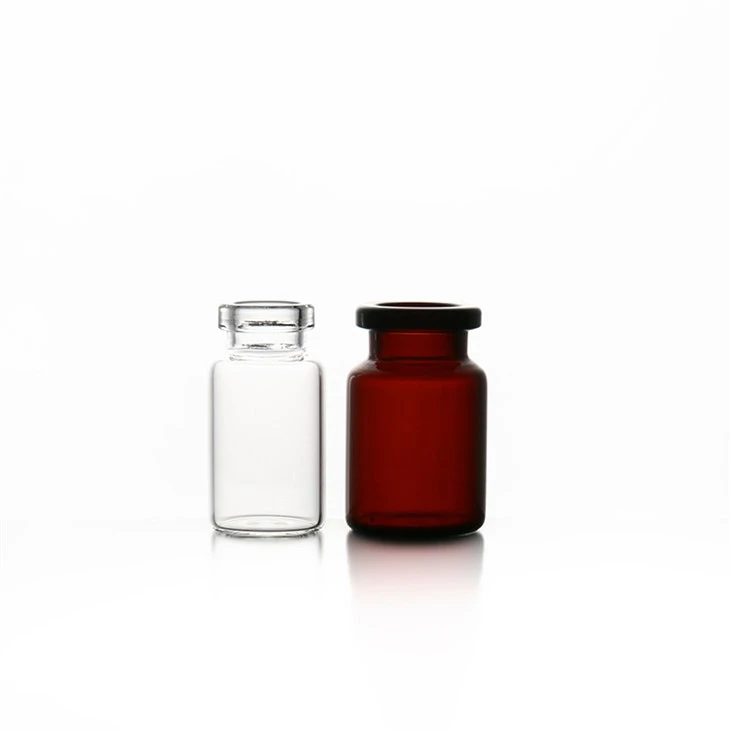
Amber glass bottles, like those available at Amber Glass Bottle, are commonly used for storing light - sensitive medications. These vials are made of amber - colored glass, which provides excellent protection against ultraviolet (UV) light. In terms of syringe compatibility, they are generally similar to other glass vials. However, the rubber stoppers used in amber glass bottles may be formulated to be more resistant to environmental factors, which could potentially affect the ease of needle penetration. Some syringes with finer needles may require a bit more force to pierce through these stoppers, but overall, they are compatible with a wide range of syringe types.
Medical Vials
Medical Vial is a broad term that encompasses various types of glass containers used for medical purposes. These vials can have different volumes, ranging from a few milliliters to larger sizes. When it comes to syringe compatibility, the volume of the vial is an important factor. A large - volume vial may require a syringe with a larger barrel to withdraw the entire contents efficiently. Additionally, the shape of the vial can also play a role. Some vials have a narrow neck, which may make it more challenging to insert a syringe needle at the correct angle, especially if the syringe has a large - diameter barrel.
Glass Injection Vials
Glass Injection Vials are specifically designed for injectable medications. They are usually made of high - quality glass that is resistant to chemical reactions and breakage. These vials often have a precision - engineered neck finish to ensure a proper seal and easy access with a syringe. Syringes used with glass injection vials are typically of high - quality and are designed to be compatible with the vial's closure system. For example, many glass injection vials use a lyophilized stopper, which is designed to be pierced by a syringe needle without leaving any debris or particles in the medication.
Factors Affecting Compatibility
Medication Properties
The nature of the medication stored in the glass medical vial can significantly affect syringe compatibility. Viscous medications, such as some vaccines or oil - based injectables, require a syringe with a larger - bore needle to allow for smooth withdrawal. If a small - gauge needle is used, the medication may not flow through the needle easily, and it may take a long time to withdraw the required dose. On the other hand, medications that are prone to foaming or air entrapment may require special syringe designs to minimize these issues.

Syringe Design
The design of the syringe itself also plays a crucial role. Some syringes have a luer - lock connection, which provides a secure and tight fit between the syringe and the needle. This type of connection is often preferred when using glass medical vials, as it reduces the risk of leakage during the withdrawal process. Other syringes may have a slip - tip design, which is simpler but may not be as secure. Additionally, the length of the syringe barrel and the position of the plunger can affect the ease of use when withdrawing medication from a vial.
Compatibility Testing
To ensure that glass medical vials are compatible with different types of syringes, manufacturers often conduct compatibility testing. This involves using a variety of syringe types to withdraw medications from the vials under different conditions. The tests evaluate factors such as needle penetration force, seal integrity after needle withdrawal, and the presence of any particles or debris in the withdrawn medication.
During these tests, it is important to simulate real - world conditions as closely as possible. For example, the temperature and humidity of the testing environment can affect the properties of the vial's closure and the medication inside. By conducting comprehensive compatibility testing, manufacturers can identify any potential issues and make necessary adjustments to the vial or syringe design.
Conclusion
In conclusion, glass medical vials are not compatible with all types of syringes in an absolute sense. While they are generally designed to work with a wide range of syringe types, several factors such as vial design, syringe design, and medication properties can affect compatibility. As a supplier of glass medical vials, we are committed to ensuring that our products are of the highest quality and are as compatible as possible with different syringes.
If you are in the market for glass medical vials and have questions about compatibility with your specific syringes or need more information about our products, we encourage you to contact us for a procurement discussion. We have a team of experts who can provide detailed guidance and help you find the best solutions for your medical needs.
References
- European Pharmacopoeia, "General Chapter on Containers for Pharmaceutical Use".
- United States Pharmacopeia, "Chapter <660> Containers - Glass".
- "Medical Packaging Technology: Design, Development, and Technology" by Michael A. Roberts.